
Luxury Arabian Oud Perfume Blog: Your Guide to Exquisite Fragrances
Eau de parfum vs oud: key differences explained in 2026

Many fragrance enthusiasts mistakenly believe eau de parfum and oud are interchangeable terms or that oud is simply another concentration type. In reality, eau de parfum describes a fragrance concentration level with 15-20% perfume oils, while oud refers to a specific resinous ingredient derived from agarwood. Understanding this distinction transforms how you select, wear, and appreciate perfumes. This guide clarifies the differences between these two concepts, explores their unique characteristics, and helps you choose the right fragrance for your lifestyle and preferences.
Table of Contents
- Key takeaways
- What is eau de parfum?
- Understanding oud: the essence and its unique qualities
- Comparing eau de parfum and oud: concentration, scent, and performance
- Choosing between eau de parfum and oud: practical guidance for fragrance lovers
- Explore premium eau de parfum and oud perfumes at Oudh Shop
- Frequently asked questions
Key Takeaways
| Point | Details |
|---|---|
| Definition of eau de parfum | Eau de parfum refers to a fragrance concentration containing 15 to 20 per cent perfume oils rather than a specific scent. |
| Oud explained | Oud is a resinous ingredient derived from agarwood and is used for its long lasting character rather than a fragrance concentration. |
| Performance contrasts | Eau de parfum typically lasts six to eight hours on the skin with noticeable projection, whereas oud oils can endure longer but may project less. |
| High quality blends | Quality oud eau de parfum blends combine extended longevity with notable sillage, offering depth and present scent trail. |
| Choosing by style and occasion | Choosing between these options depends on personal style, scent preference and the occasion. |
What is eau de parfum?
Eau de parfum represents a specific concentration category in perfumery, not a particular scent or ingredient. This alcohol-based fragrance format contains 15-20% perfume oil concentration, striking a balance between potency and wearability. The remaining composition consists primarily of alcohol, which helps disperse the fragrance molecules into the air around you.
This concentration level delivers impressive performance characteristics. You can expect 6-8+ hours of longevity on skin, making eau de parfum suitable for full workdays or evening events without reapplication. The alcohol carrier ensures strong projection, creating a noticeable scent trail that others can detect from a comfortable distance. This sillage makes eau de parfum ideal when you want your fragrance to announce your presence.
Fragrance houses create eau de parfum formulations across every scent family. Floral, oriental, woody, fresh, and gourmand profiles all appear in this concentration. The versatility explains why eau de parfum dominates the luxury fragrance market. Whether you prefer light citrus notes or deep amber accords, you will find options in this format.
Many fragrance enthusiasts choose eau de parfum as their daily signature scent. The concentration provides enough strength to last through busy schedules whilst remaining office-appropriate. Special occasions also suit this format, as the projection ensures your carefully chosen fragrance makes an impression. Popular formulations include both designer and niche offerings, with price points ranging from accessible to premium.
Pro Tip: Applying eau de parfum on pulse points like wrists, neck, and behind ears enhances the scent’s projection and longevity by leveraging your body’s natural warmth to diffuse fragrance molecules.
Key characteristics of eau de parfum include:
- Balanced formula offering both longevity and projection
- Suitable for various occasions from casual to formal
- Wide availability across fragrance houses and price ranges
- Alcohol base creates immediate scent dispersion
- Typically requires 3-5 sprays for optimal effect
Explore diverse eau de parfum options through our perfume finder tool to discover scents matching your preferences.
Understanding oud: the essence and its unique qualities
Oud stands apart as a precious fragrance ingredient rather than a concentration type. This dark, resinous material comes from agarwood trees that have been infected by specific moulds, triggering the tree to produce a protective resin. The resulting oud possesses distinctive qualities that have captivated perfumers and fragrance lovers for centuries.

Arabian and Middle Eastern perfumery traditions have treasured oud for generations, considering it amongst the most valuable raw materials in perfumery. The scent profile combines deep woody notes with smoky, slightly sweet, and balsamic undertones. Some varieties exhibit leather or animalic facets, whilst others lean towards medicinal or incense-like qualities. This complexity makes oud instantly recognisable yet difficult to describe fully.
When applied as pure oil or concentrated attar, oud demonstrates exceptional longevity, often lasting 8-12+ hours on skin. The oil’s molecular structure allows it to bind effectively with skin proteins, creating lasting wear that outlasts many alcohol-based fragrances. However, this concentration typically produces subtler projection compared to eau de parfum formats.
The intimate nature of oud’s sillage creates a personal scent experience. Rather than broadcasting your fragrance across a room, oud tends to reveal itself in close proximity. This characteristic appeals to those seeking signature scents that feel exclusive and understated. The bold aroma commands attention without overwhelming, making it suitable for fragrance connoisseurs who appreciate nuanced complexity.
Luxury perfumery increasingly incorporates oud into contemporary compositions. Western fragrance houses blend it with rose, saffron, amber, and modern synthetics to create accessible interpretations. These formulations introduce oud’s richness to broader audiences whilst maintaining its exotic appeal.
Oud oil often lasts longer on skin (8-12+ hrs) but with lower projection compared to eau de parfum, creating an intimate yet enduring fragrance experience.
Distinctive oud characteristics include:
- Derived from agarwood resin, not a synthetic creation
- Woody, smoky, and balsamic scent profile with variations
- Exceptional longevity exceeding most fragrance formats
- Subtle projection creating close-to-skin wear
- Highly valued in traditional and modern perfumery
- Available as pure oil, attar, or blended in various concentrations
Comparing eau de parfum and oud: concentration, scent, and performance
Understanding the fundamental difference between these concepts prevents confusion when shopping for fragrances. Eau de parfum describes how concentrated a fragrance is, whilst oud identifies a specific ingredient used within perfumes. You could encounter an oud eau de parfum, which combines the ingredient with the concentration format.
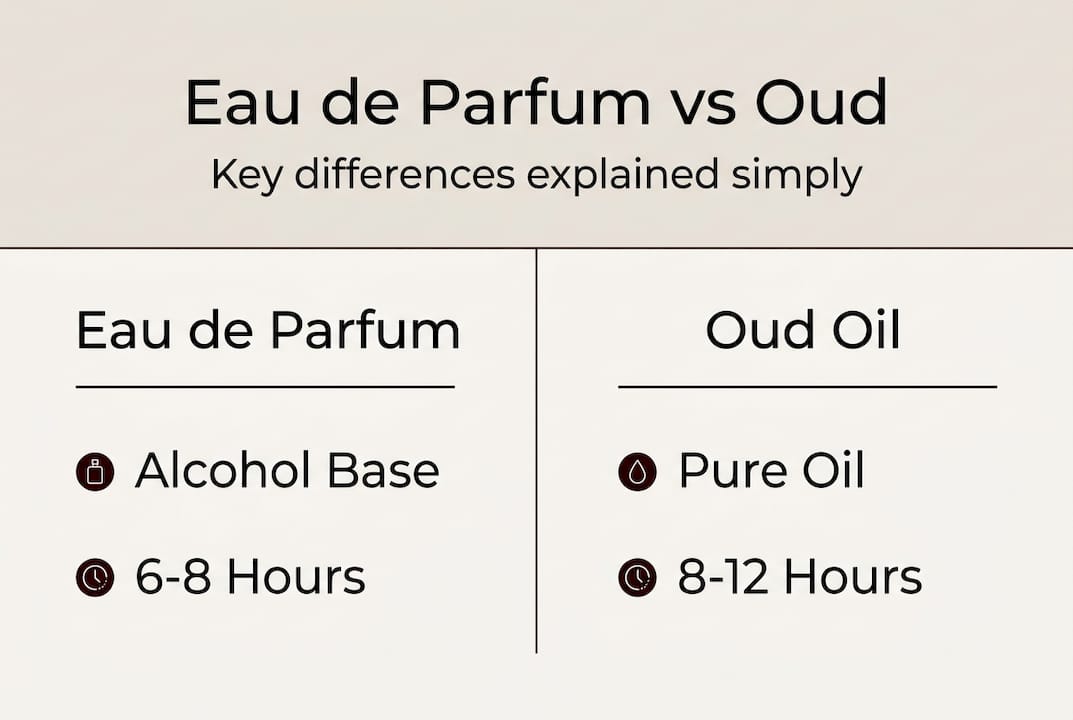
Performance characteristics vary significantly between pure oud oils and traditional eau de parfum formulations. The table below summarises key differences:
| Characteristic | Eau de parfum | Oud (pure oil/attar) |
|---|---|---|
| Oil concentration | 15-20% perfume oils | 80-100% concentrated oud |
| Typical longevity | 6-8+ hours | 8-12+ hours |
| Projection strength | Strong sillage | Subtle, intimate |
| Scent profile | Varies widely (floral, fresh, oriental, etc.) | Woody, smoky, balsamic, resinous |
| Primary use | Versatile, daily wear to special occasions | Signature scent, evening wear, layering base |
| Application method | Spray atomiser | Dabbed with applicator or finger |
Quality matters immensely when comparing these formats. High-quality oud eau de parfum can match or exceed the longevity and projection of traditional eau de parfum whilst incorporating oud’s distinctive character. These blends harness alcohol’s dispersive properties to broadcast oud’s richness more effectively than pure oil applications.
Scent profiles differ markedly between generic eau de parfum and oud-focused compositions. Most eau de parfum fragrances feature top, heart, and base notes that evolve over hours. Fresh citrus or floral openings give way to spicy or woody hearts, settling into musky or ambery bases. Oud-dominant fragrances prioritise the ingredient’s natural complexity, often pairing it with complementary notes like rose, saffron, or leather that enhance rather than mask its character.
The choice between formats depends on your desired fragrance experience. Eau de parfum suits those wanting noticeable projection and versatile wear across settings. Pure oud appeals to fragrance enthusiasts seeking intimate, long-lasting scents with cultural heritage. Oud eau de parfum bridges both worlds, offering the best attributes of each approach.
Pro Tip: Sampling both pure oud oils and oud-based eau de parfums helps you discover your ideal fragrance balance, allowing you to experience how concentration affects scent delivery and longevity.
Key comparison points include:
- Eau de parfum is a concentration category; oud is a raw material
- Pure oud oils last longer but project less than alcohol-based formats
- Oud eau de parfum combines extended longevity with strong sillage
- Scent complexity differs based on formulation and ingredient quality
- Both formats serve different occasions and personal preferences
Explore how to select authentic oud compositions through our oud fragrance selection process guide.
Choosing between eau de parfum and oud: practical guidance for fragrance lovers
Selecting the right fragrance format requires considering multiple factors beyond simple preference. Your lifestyle, daily routine, and the occasions you dress for all influence which option serves you best. Personal style and desired effect matter more than following rigid rules about when to wear specific fragrances.
Follow this step-by-step approach to determine your ideal choice:
Assess your scent preferences: Do you gravitate towards fresh, floral notes or rich, woody compositions? If you prefer lighter profiles, traditional eau de parfum offers more variety. Those drawn to deep, resinous scents will appreciate oud-focused options.
Consider your daily environment: Office settings with close quarters may suit subtler oud oils, whilst social events benefit from eau de parfum’s projection. Temperature also matters, as heat amplifies fragrance intensity.
Evaluate longevity needs: If your schedule demands all-day wear without reapplication, oud’s extended longevity provides practical advantages. Eau de parfum works well when you can refresh your scent midday.
Test before committing: Sample both formats on your skin, as body chemistry dramatically affects how fragrances develop. What smells divine on a tester strip may transform differently on you.
Experiment with layering: Combining a subtle oud base with a complementary eau de parfum creates unique, personalised scents. This technique extends longevity whilst adding complexity.
Match intensity to occasion: Reserve bold oud compositions for evening events or intimate gatherings. Lighter eau de parfum suits professional settings and daytime activities.
Each format offers distinct advantages. Eau de parfum provides versatility, with countless scent profiles available at various price points. The spray application ensures even distribution and immediate projection. However, longevity may require touch-ups throughout the day, and alcohol content can irritate sensitive skin.
Oud delivers exclusivity and exceptional staying power. The concentrated format means a little goes far, making bottles last months despite higher initial costs. Cultural significance adds depth to the wearing experience. Yet the bold character may overwhelm those new to rich fragrances, and availability remains more limited than mainstream eau de parfum.
Pro Tip: Wear lighter eau de parfums for daytime activities and professional settings, then switch to richer oud scents for evening occasions or special events to match fragrance intensity with social context.
Cultural context influences fragrance choices as well. Middle Eastern traditions embrace oud’s intensity for daily wear, whilst Western preferences often reserve it for special occasions. Your comfort level with fragrance strength should guide decisions rather than arbitrary conventions.
Discover traditional oud formats through our best oud attar guide to explore concentrated options beyond eau de parfum.
Explore premium eau de parfum and oud perfumes at Oudh Shop
Now that you understand the distinctions between eau de parfum and oud, finding quality fragrances becomes your next step. Oudh Shop curates an exceptional collection of authentic oud and eau de parfum selections, delivering Middle Eastern perfumery heritage directly to UK fragrance enthusiasts. Our range includes pure oud oils, oud-infused eau de parfums, and diverse scent profiles to suit every preference.
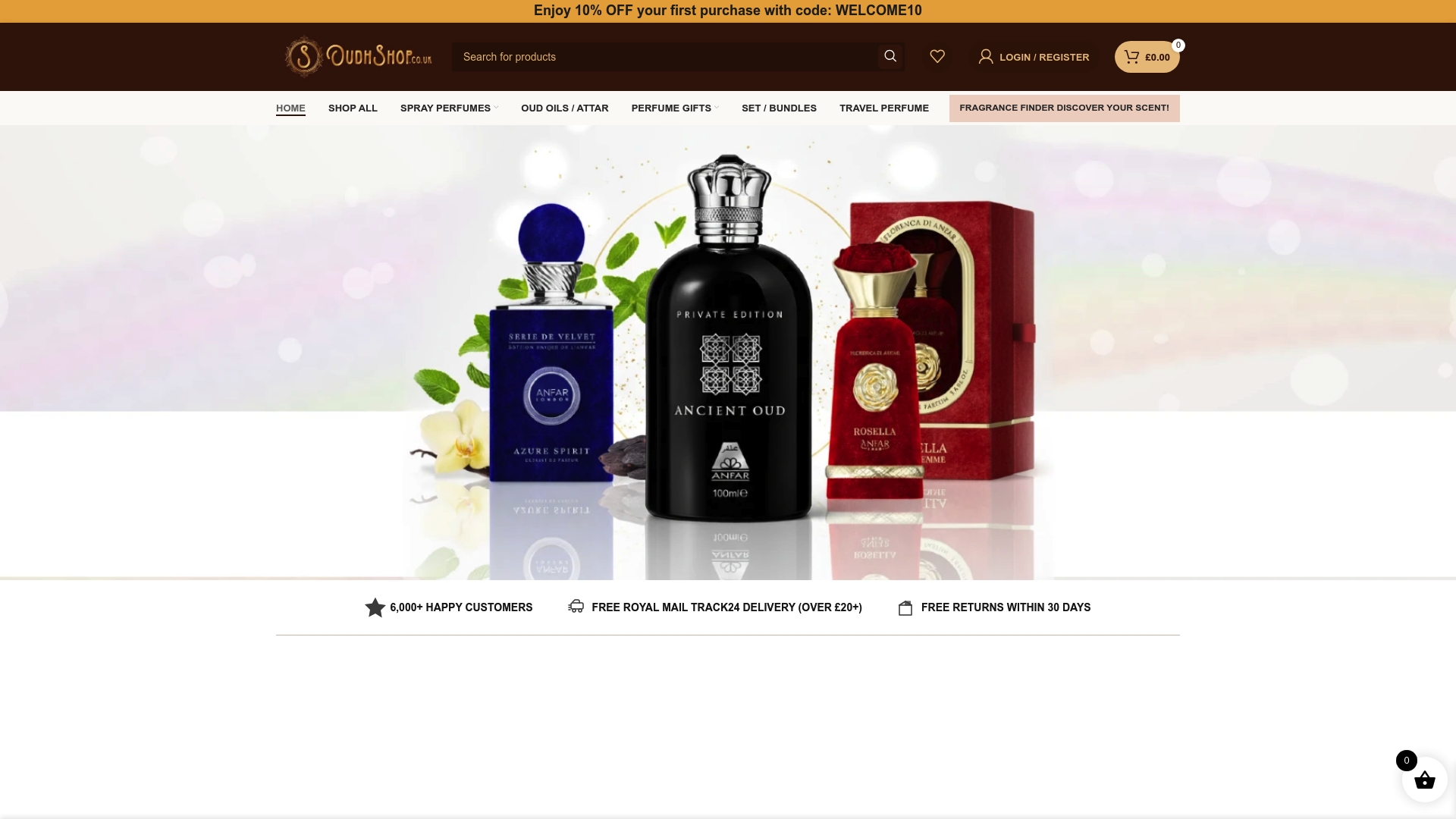
Navigating our oud perfumes shop reveals carefully selected fragrances that balance quality with accessibility. Whether you seek traditional attar applications or modern eau de parfum formats, our collection provides options for both newcomers and seasoned oud lovers. Expert curation ensures every bottle meets rigorous authenticity standards, so you can purchase with confidence.
Convenience enhances your shopping experience. Our travel size perfumes let you test fragrances without committing to full bottles, perfect for discovering your signature scent. The perfume finder tool streamlines selection by matching your preferences with suitable options. Next-day delivery across the UK means your chosen fragrance arrives quickly, ready to elevate your scent wardrobe.
Frequently asked questions
What is the exact difference between eau de parfum and oud?
Eau de parfum describes a fragrance concentration level containing 15-20% perfume oils diluted in alcohol, whilst oud refers to a specific scent ingredient derived from agarwood resin. The terms are not interchangeable; one indicates formula strength, the other identifies a raw material. You can find oud as an ingredient within an eau de parfum formulation, combining both concepts in a single bottle.
Does oud always come as an eau de parfum?
No, oud appears in multiple formats beyond eau de parfum. Pure oud oil offers the most concentrated form, typically applied by dabbing small amounts on pulse points. Attar formulations blend oud with carrier oils for traditional application methods. You will also find oud in eau de toilette, parfum, and even solid perfume formats. High-quality oud eau de parfums combine concentration benefits with oud’s distinctive scent characteristics, offering versatility that pure oils cannot match.
Which lasts longer on skin: eau de parfum or oud?
Oud oils typically last 8-12+ hours on skin, exceeding the 6-8+ hour longevity of most eau de parfum formulations. The concentrated oil binds effectively with skin proteins, creating exceptional staying power. However, longevity depends on multiple factors including fragrance quality, your skin’s natural oils, and environmental conditions. Some premium oud eau de parfums match pure oil longevity whilst providing stronger projection, offering the best of both formats.
Can I wear oud every day or is it only for special occasions?
Oud suits daily wear if you appreciate rich, woody scents and feel comfortable with its distinctive character. Many Middle Eastern cultures embrace oud as an everyday fragrance, whilst Western traditions often reserve it for evenings or special events. Your personal style and the preferences of those around you should guide this decision. Lighter oud compositions or oud-infused eau de parfums offer more versatile options for frequent wear compared to intensely concentrated pure oils.