
Luxury Arabian Oud Perfume Blog: Your Guide to Exquisite Fragrances
Attar vs oud: what every fragrance lover should know
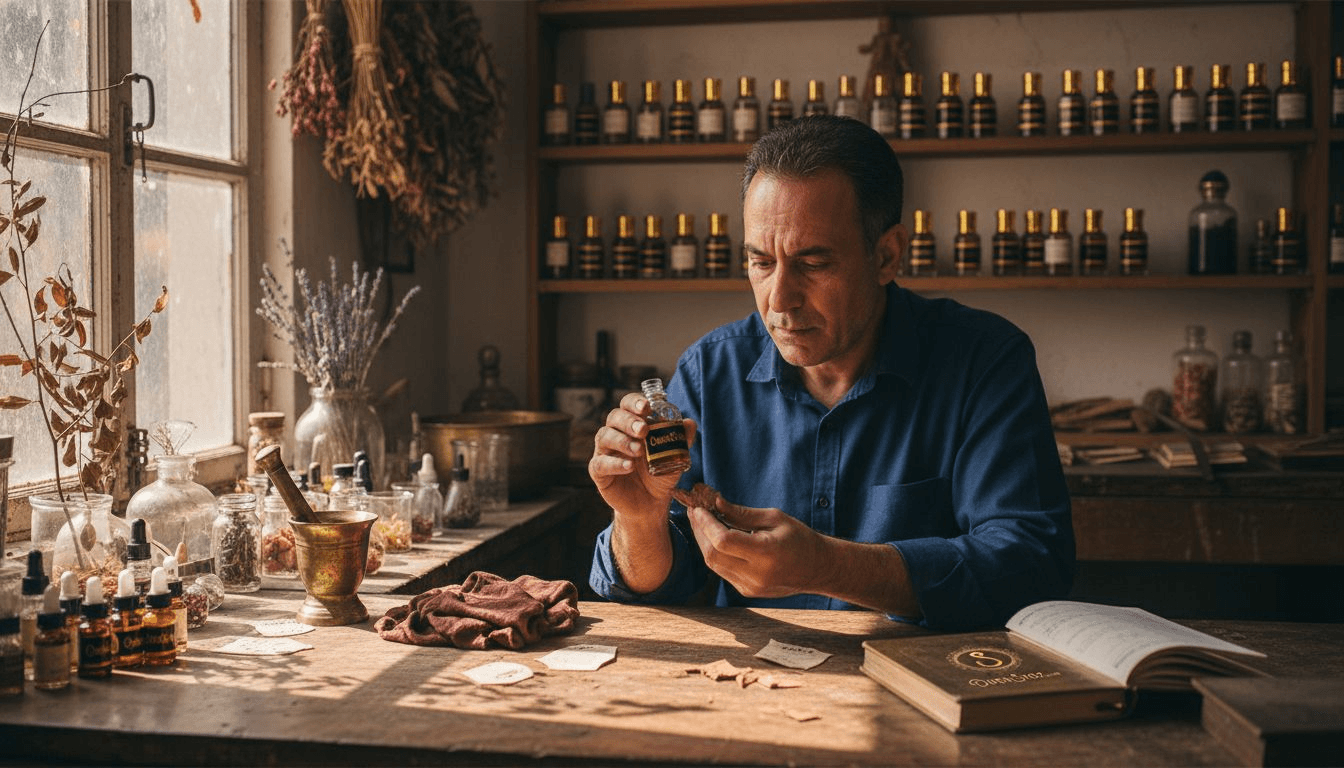
Many fragrance enthusiasts in the UK encounter attar and oud in the same boutiques, yet these Middle Eastern treasures are fundamentally different. Attar is a natural perfume oil distilled into sandalwood, whilst oud is a rare resin from agarwood trees. This guide clarifies their origins, scent profiles, and how to choose between them for personal wear or thoughtful gifts.
Table of Contents
- Understanding Attar: Natural Artisanal Perfume Oil
- What Is Oud And Its Distinctive Qualities
- Comparing Attar And Oud: Scent, Production, And Usage
- Choosing And Enjoying Attar And Oud In The UK
- Explore Authentic Oud And Attar Perfumes At Oudh Shop
- Frequently Asked Questions
Key takeaways
| Point | Details |
|---|---|
| Attar is a distilled perfume oil | Natural perfume oil created by distilling flowers, herbs, or woods into sandalwood base using traditional artisanal methods. |
| Oud originates from infected agarwood | Fragrance ingredient derived from agarwood resin produced when trees are infected by specific fungi. |
| Distillation techniques shape aromas | Artisanal distillation methods significantly impact the final scent profile of both attar and oud oils. |
| Application methods differ significantly | Attar is worn directly as subtle drops on pulse points, whilst oud appears in blended perfumes or pure oils. |
| Cultural and luxury status varies | Attar represents traditional perfumery, whilst oud commands premium prices due to rarity and complexity. |
Understanding attar: natural artisanal perfume oil
Attar represents centuries of perfume tradition. Attar is a natural perfume oil created by distilling flowers, herbs, spices, or woods into a base oil, traditionally sandalwood, using an artisanal method passed through generations. The process demands patience and skill, with master distillers carefully monitoring temperatures and timing.
The distillation unfolds slowly over hours or days. Raw materials like rose petals, jasmine blossoms, or vetiver roots release their essences into copper vessels. These aromatic molecules travel through steam into sandalwood oil, which acts as both carrier and enhancer. Artisanal distillation techniques significantly impact the aroma profile of the final product, creating depth impossible to replicate synthetically.
Sandalwood serves as the foundation for most attars because its creamy, woody character blends harmoniously with florals and spices. The resulting perfume oil carries an intimate, subtle quality that develops on your skin throughout the day. Unlike alcohol-based fragrances that evaporate quickly, attar molecules bond with your body’s natural oils, creating a personalised scent signature.
Common attar varieties include:
- Rose attar: sweet, romantic, slightly spicy
- Jasmine attar: heady, floral, intoxicating
- Vetiver attar: earthy, grounding, fresh
- Sandalwood attar: creamy, woody, meditative
- Amber attar: warm, resinous, sensual
You apply attar differently than spray perfumes. Attar is typically applied as a tiny drop on wrists, behind the ears, inside the elbow, or on certain fabrics, offering a subtle, long-lasting, and intimate aroma. The concentration means a single drop suffices, making even small bottles last months with regular use.
Pro Tip: Warm your pulse points before applying attar by rubbing them gently. This opens your pores and helps the oil blend with your skin chemistry for a more personalised scent.
Many UK fragrance lovers discover oud musk perfume oils combine attar’s traditional methods with contemporary scent profiles. These blends offer the best of both worlds: artisanal quality with modern appeal.
What is oud and its distinctive qualities
Oud tells a different story entirely. Oud is a fragrance ingredient derived from the agarwood tree, specifically the resin produced when the tree is infected by a specific fungus. This infection triggers a defence mechanism, flooding the wood with dark, fragrant resin. Only infected trees produce this precious substance, making genuine oud exceptionally rare.

The extraction process differs markedly from attar production. Harvesters identify infected agarwood sections, then employ steam or vacuum distillation to draw out the resinous oil. The choice of distillation method depends on the specific characteristics of the wood being used, with each technique revealing different facets of the complex aroma.
Oud’s scent profile is bold and unmistakable. Where attar whispers, oud announces. The aroma ranges from deep woody notes to leathery, sometimes animalic tones, with hints of dried fruit, tobacco, or incense depending on the wood’s origin. Vietnamese oud differs from Cambodian, which differs from Indian varieties, each carrying regional terroir.
Rarity drives oud’s luxury status. Wild agarwood trees face endangerment, leading to cultivated plantations and strict harvesting regulations. This scarcity, combined with extraction complexity, positions oud among the world’s most expensive fragrance materials. A single millilitre of pure oud oil can command hundreds of pounds.
Key oud characteristics include:
- Source: infected agarwood resin
- Scent: woody, dark, complex, sometimes animalic
- Extraction: steam or vacuum distillation
- Usage: pure oil or blended ingredient
- Status: luxury fragrance material
Perfumers rarely use oud alone in Western fragrances. Instead, they blend it with roses, saffron, amber, or musks to create balanced compositions. These blends make oud accessible to those new to Middle Eastern perfumery, softening its intensity whilst preserving its character.
Pro Tip: Start your oud journey with blended compositions before exploring pure oud oils. This gradual approach helps your nose appreciate the complexity without overwhelming your senses.
Understanding what is oud perfume reveals why this ingredient commands such devotion among fragrance connoisseurs worldwide. Its depth and longevity create presence that lingers for hours, even days on fabrics.
Comparing attar and oud: scent, production, and usage
Attar and oud are often wrongly used interchangeably; they are connected but differ in their creation, scent, and usage. This confusion stems from both appearing in Middle Eastern perfumery, yet their distinct identities become clear upon closer examination.
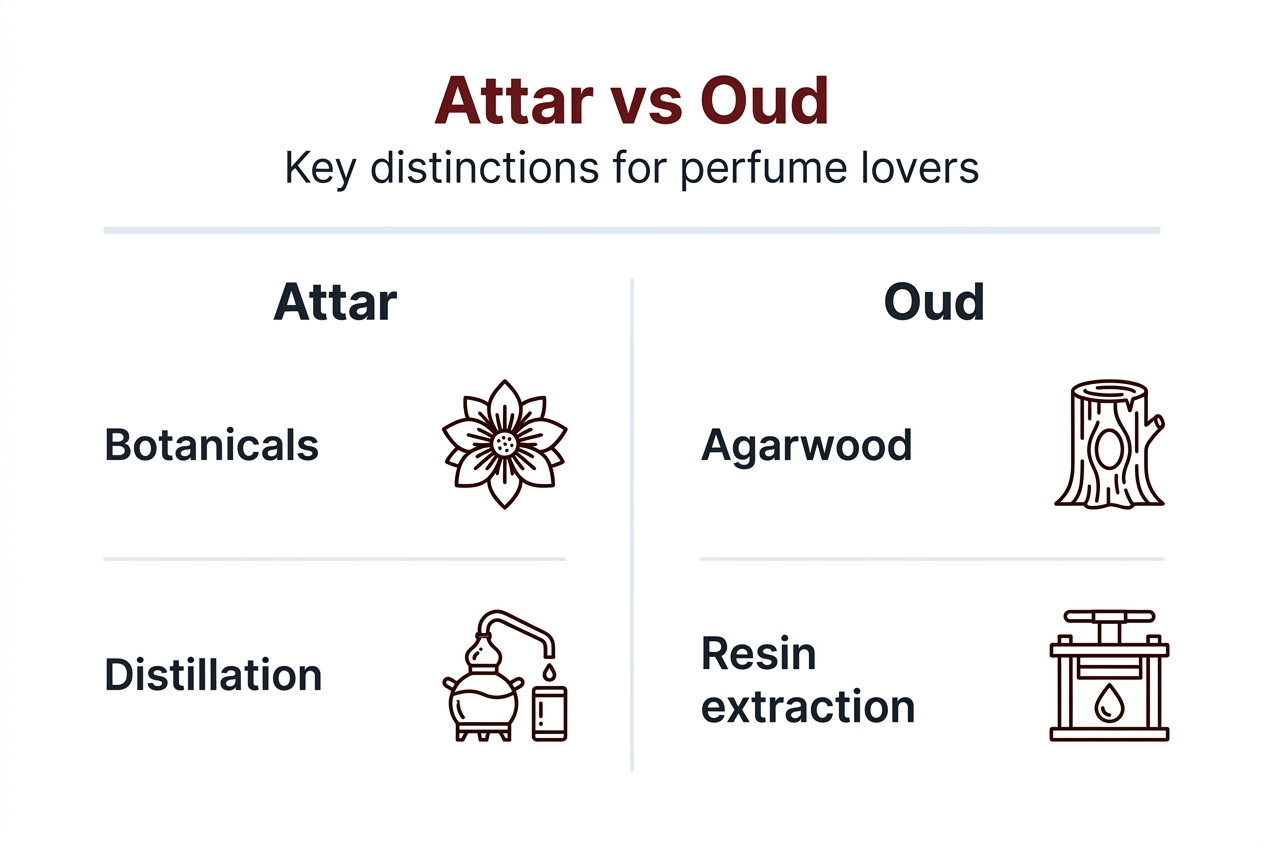
| Aspect | Attar | Oud |
|---|---|---|
| Source material | Flowers, herbs, spices, woods | Infected agarwood resin |
| Base carrier | Sandalwood oil | Used pure or in blends |
| Distillation | Slow hydro-distillation into oil | Steam or vacuum extraction |
| Scent profile | Subtle, floral, intimate | Bold, woody, complex |
| Application | Pure oil on pulse points | Ingredient or pure oil |
| Longevity | Hours, close to skin | Hours to days, projects further |
| Cultural use | Traditional personal perfume | Luxury ingredient, incense |
| Price range | Moderate to premium | Premium to ultra-luxury |
Production methods reveal fundamental differences. Attar makers distil botanical materials into sandalwood, creating a marriage of scents. Oud producers extract resin from wood, isolating a single powerful ingredient. The former involves blending essences, the latter concentrates one rare substance.
Scent profiles couldn’t be more distinct. Attar offers approachable florals, woods, and spices that sit close to your skin. You notice it when someone leans in for a conversation. Oud projects boldly, announcing itself before you enter a room. Its intensity either captivates or overwhelms, rarely inspiring indifference.
Cultural traditions shape how people wear each fragrance:
- Attar: daily personal scent, applied sparingly to pulse points
- Oud: special occasions, layered with other fragrances, used in incense
- Attar: intimate, personal fragrance journey
- Oud: statement scent, projecting confidence and luxury
Modern perfumery has embraced both. You’ll find attar-inspired compositions in niche brands seeking natural alternatives to synthetics. Oud appears everywhere from designer houses to exclusive artisan creators. The 2026 fragrance landscape shows growing appreciation for both traditions.
Exploring oud perfumes and attar products reveals how contemporary creators honour tradition whilst innovating. Some blend attar techniques with oud ingredients, creating hybrid compositions that bridge both worlds. Understanding oud perfume trends 2026 shows how creamy, versatile interpretations make these exotic scents accessible to Western audiences.
The choice between attar and oud depends on your fragrance preferences. Do you prefer subtle intimacy or bold presence? Floral delicacy or woody depth? Personal ritual or statement making? Both offer authentic connections to Middle Eastern perfume heritage, just through different sensory experiences.
Choosing and enjoying attar and oud in the UK
Selecting authentic attar and oud requires knowledge and trusted sources. The UK market offers genuine treasures alongside synthetic imitations, making informed choices essential. Quality indicators help you distinguish real artisanal products from mass-produced alternatives.
For attar, examine these quality markers:
- Oil consistency: genuine attar appears slightly thick, not watery
- Scent development: natural oils evolve on skin over hours
- Ingredient transparency: reputable sellers disclose botanical sources
- Packaging: traditional glass bottles protect oil from light degradation
- Price reality: authentic rose or jasmine attar cannot be cheap
Oud authentication presents different challenges. Pure oud oil commands premium prices, so suspiciously cheap offerings likely contain synthetics or heavy dilution. Smell samples if possible, as genuine oud carries complexity that synthetic versions cannot replicate. The scent should reveal multiple facets: woody, slightly sweet, perhaps leathery or smoky, never one-dimensional.
Attar is typically applied as a tiny drop on wrists, behind the ears, inside the elbow, or on certain fabrics, offering a subtle, long-lasting, and intimate aroma. Less truly means more with these concentrated oils. A single drop releases fragrance for hours, whilst over-application can overwhelm both wearer and those nearby.
Practical application steps:
- Cleanse application areas with unscented soap
- Apply to pulse points where blood flow warms the oil
- Dab gently rather than rubbing, which breaks down molecules
- Allow several minutes for the scent to develop and settle
- Reapply sparingly after 6-8 hours if desired
Gifting attar or oud shows thoughtfulness and cultural appreciation. These fragrances make memorable presents for birthdays, anniversaries, or celebrations. Consider the recipient’s existing scent preferences: floral lovers might appreciate rose attar, whilst those who favour woody colognes could enjoy oud blends.
Storage affects longevity significantly. Keep bottles away from direct sunlight and heat, ideally in cool, dark cupboards. Properly stored attar and oud oils maintain their character for years, even decades. Some attars actually improve with age, developing richer, more complex profiles.
Pro Tip: Test unfamiliar scents on a blotter card first, then on your skin if you like the initial impression. Your body chemistry interacts with natural oils uniquely, so what smells divine on a friend might differ on you.
The oud fragrance selection process guides you through choosing scents that match your preferences and occasions. Understanding authentic arabic oud perfume helps distinguish genuine Middle Eastern traditions from Western interpretations.
For those new to these fragrances, oud perfume oils offer concentrated experiences without committing to large bottles. Sample sets let you explore different profiles before investing in full sizes. This approach builds your fragrance vocabulary whilst discovering what resonates with your personal taste.
Explore authentic oud and attar perfumes at Oudh Shop
Now that you understand the distinct qualities of attar and oud, finding authentic products becomes your next step. Oudh Shop brings genuine Middle Eastern perfumery to UK fragrance enthusiasts, offering carefully curated selections that honour traditional craftsmanship.
Our collection features both pure attar oils and sophisticated oud compositions, from classic rose and jasmine attars to contemporary oud blends that balance tradition with modern sensibilities. Each product undergoes careful quality assessment to ensure you receive authentic fragrances worthy of your collection.
We understand that choosing between numerous options can feel overwhelming. That’s why we offer perfume gift sets that let you explore multiple scents, perfect for discovering your signature fragrance or presenting thoughtful gifts. For those who travel frequently or prefer trying before committing, our travel size perfumes provide convenient introduction to these exotic aromas.
Browse our complete oud perfumes and attar collection to find scents that speak to your personal style, whether you seek intimate florals or bold woody statements.
Frequently asked questions
What is the main difference between attar and oud?
Attar is a natural perfume oil created by distilling botanical materials into sandalwood base, whilst oud is a rare resin extracted from infected agarwood trees. Attar offers subtle, intimate scents worn directly on skin, whereas oud provides bold, woody complexity often used as a luxury perfume ingredient.
Can you wear attar and oud together?
Yes, layering attar and oud creates unique fragrance combinations. Apply attar first to pulse points, then add a touch of oud or oud-based perfume on top. This technique, called fragrance layering, lets you personalise scent profiles whilst balancing attar’s subtlety with oud’s projection.
How long do attar and oud fragrances last?
Attar typically lasts 6-8 hours on skin due to oil-based formulation that bonds with your natural oils. Oud demonstrates exceptional longevity, often persisting 12-24 hours on skin and days on fabrics. Both outlast alcohol-based perfumes significantly, making them excellent value despite higher initial costs.
Are attar and oud suitable for daily wear?
Attar suits daily wear beautifully, offering subtle fragrance that enhances rather than overwhelms. Oud’s intensity makes it better suited for evening events or special occasions unless diluted in balanced compositions. Many modern oud perfumes blend the ingredient with lighter notes specifically for everyday versatility.
How can you tell if attar or oud is authentic?
Authentic attar shows slight viscosity, develops complexity on skin over time, and comes from reputable sources with transparent ingredient information. Genuine oud oils command premium prices, reveal multi-layered scent profiles, and often include origin details about the agarwood source. Suspiciously cheap offerings likely contain synthetics or heavy dilution.
What makes oud so expensive compared to attar?
Oud’s rarity drives its premium pricing, as only fungus-infected agarwood trees produce the fragrant resin, and wild trees face endangerment. Extraction requires specialised knowledge and equipment, yielding small amounts of oil from large quantities of wood. Whilst quality attar also commands respect, oud’s scarcity and cultural cachet position it among the world’s most valuable fragrance materials.