Luxury Arabian Oud Perfume Blog: Your Guide to Exquisite Fragrances
Enhance your unique scent: the art of scent layering
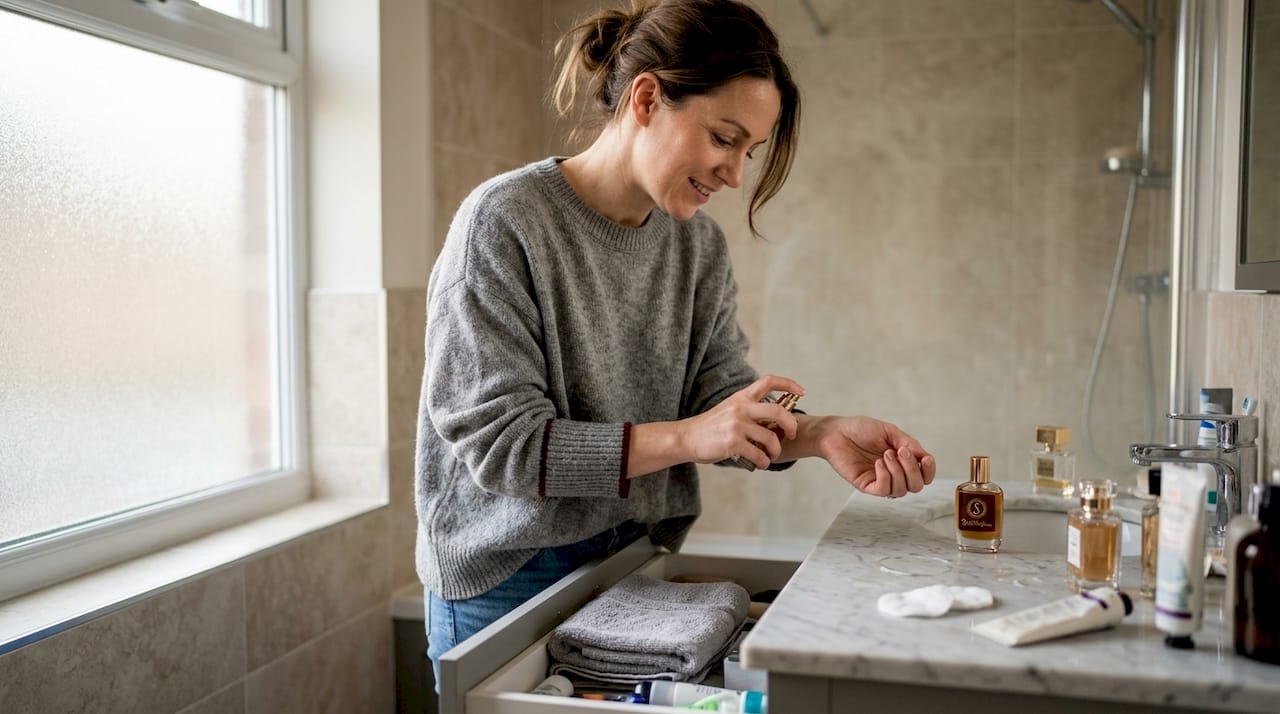
TL;DR:
- Scent layering creates personalized, evolving fragrances with enhanced longevity and personal expression.
- Starting with simple two-scent combinations on moisturized skin is recommended for best results.
- Balancing fragrance families and avoiding heavy scents together ensures harmonious and lasting layered perfumes.
Most fragrance lovers pick one perfume and wear it faithfully, day after day. It is a comforting ritual, certainly, but it quietly closes the door on something far more extraordinary. Scent layering, which involves applying multiple fragrances in sequence to create a custom, evolving profile with enhanced longevity and personalisation, transforms the way you experience fragrance entirely. Rather than wearing a scent, you compose one. This guide covers why layering matters, how to practise it with confidence, and how oud and Arabian fragrances in particular open up a world of exquisite, deeply personal expression for fragrance enthusiasts across the UK.
Table of Contents
- What is scent layering and why does it matter?
- Core techniques: how to layer scents for maximum effect
- Balancing oud, Arabian, and Western fragrances
- Common mistakes and expert solutions
- Beyond the basics: why scent layering is the true mark of a fragrance connoisseur
- Ready to craft your signature layered scent?
- Frequently asked questions
Key Takeaways
| Point | Details |
|---|---|
| Customise your scent | Layering lets you craft a fragrance that is truly unique to you. |
| Boost fragrance longevity | Proper layering and hydration can make your scent last 6–8 hours or more. |
| Balance fragrance families | Combining oud, Arabian, and Western scents requires smart pairing for the best effect. |
| Avoid common mistakes | Start simple and steer clear of layering two heavy perfumes or over-spraying. |
What is scent layering and why does it matter?
Scent layering is the art of applying two or more fragrances, or scented products, one on top of another to build a single, cohesive aroma that is entirely your own. Think of it less like mixing paints and more like composing music: each note has its place, and together they create something richer than any single instrument could produce alone.
At its simplest, you might apply a warm body lotion before spraying your favourite eau de parfum. At its most sophisticated, you might blend an oud oil with a citrus top note and a musky base to create a scent that evolves beautifully across a full day. Scent layering creates a custom, evolving scent profile with enhanced longevity, which is precisely why so many UK fragrance enthusiasts are now making it their preferred approach.
“Layering is not about wearing more perfume. It is about wearing the right combination, in the right order, to tell a scent story that is entirely yours.”
The benefits are genuinely compelling:
- Personalisation: No two people layer scents identically, so your final fragrance is truly bespoke.
- Longevity: Layered scents, particularly those built on oil or cream bases, tend to last significantly longer on skin.
- Adaptability: You can adjust your blend seasonally, making it fresher for summer and warmer for autumn and winter.
- Sillage control: Sillage refers to the trail a fragrance leaves in the air. Layering lets you manage how powerfully your scent projects.
- Creative expression: Layering is, at its heart, a form of artistry that reflects your personality and mood.
For fragrance lovers curious about scent lasting power tips, layering is one of the most effective strategies available, and one of the most enjoyable to explore.
Core techniques: how to layer scents for maximum effect
Starting your layering journey does not require a vast collection. In fact, restraint is a virtue here. UK experts recommend starting simply, pairing just two complementary scents, balancing fragrance families, and building on a moisturising body cream base for the best results.
Here is a clear sequence to follow:
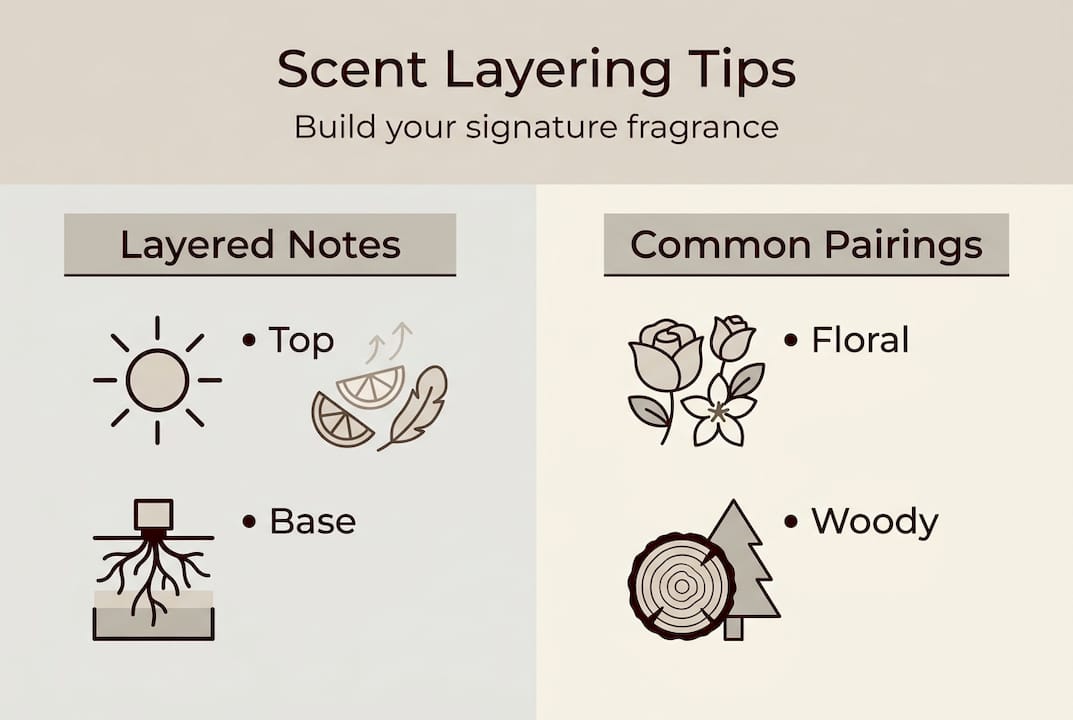
- Hydrate your skin first. Apply an unscented or lightly scented body lotion or cream. Fragrance clings far better to moisturised skin, dramatically improving wear time.
- Apply your base note or oil. This is typically your heaviest, most tenacious layer. An attar oil, which is a traditional concentrated aromatic oil popular in Arabian perfumery, or a woody base spray works perfectly here.
- Layer your middle or heart note. Floral, spicy, or oriental fragrances sit well in this position. They add character and complexity without overwhelming the composition.
- Finish with your lightest, brightest top note. A citrus or aquatic spray applied last gives the opening impression and lifts the entire blend.
- Allow each layer to settle briefly before applying the next. Thirty seconds is enough to avoid muddying the composition.
- Test on your wrist first. Spray combinations on skin, not in the air, and allow at least twenty minutes before judging the result.
Classic pairings to experiment with include floral combined with citrus for a fresh daytime blend, and woody or oriental combined with a warm amber for an evening composition. As the British climate turns cool and golden in autumn, pairing amber with oud becomes particularly sensational. Once you have built your confidence, you can find your signature Arabian scent and use it as the anchor for increasingly ambitious layering experiments.
Pro Tip: If you are new to layering, choose scents from the same fragrance house or within the same scent family. They are designed to harmonise, making your early combinations far more rewarding.
Balancing oud, Arabian, and Western fragrances
Oud, sometimes called liquid gold, is the resinous heartwood of the Agarwood tree. It is one of the most complex, tenacious, and prized materials in perfumery. When you introduce oud or other Arabian fragrance elements into a layering combination, the rules shift slightly, because these materials carry enormous character.
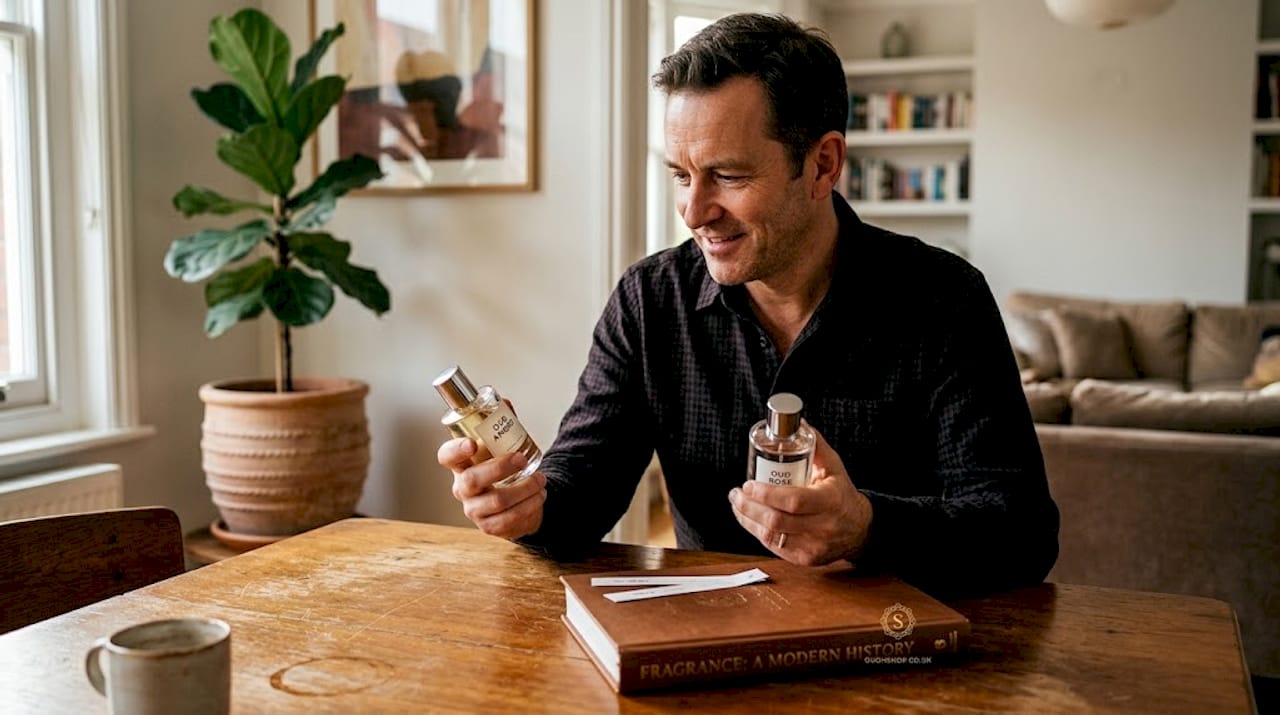
Understanding the differences between Eastern and Western layering traditions helps enormously:
| Feature | Western fragrances | Arabian/oud fragrances |
|---|---|---|
| Typical strength | Light to moderate | Moderate to very strong |
| Sillage | Subtle to medium | Expansive and long-lasting |
| Base notes | Musks, woods, moss | Oud, amber, resins, incense |
| Layering role | Versatile; work as any layer | Best as base or feature note |
| Longevity on skin | 4 to 6 hours | 8 hours or more |
When blending, always consider balancing fragrance families carefully; avoid combining two heavy scents such as oud and gourmand together, as the result can feel dense and claustrophobic rather than luxurious.
Oud works magnificently as:
- A grounding base note, supporting a lighter floral or citrus on top.
- A feature note, paired with a subtle musk or clean wood to let its smoky, sensual character breathe.
- A bridge, connecting an opening citrus burst to a rich, resinous dry-down.
Those wishing to enrich their oud fragrance collection will find a wealth of options that slot naturally into layered compositions. For those still deciding between Eastern and Western base materials, our oud vs amber guide offers a clear and illuminating comparison.
Common mistakes and expert solutions
Even experienced fragrance lovers stumble when they first experiment with layering. Knowing the pitfalls in advance saves both precious perfume and considerable frustration.
| Mistake | Why it goes wrong | Expert solution |
|---|---|---|
| Mixing two heavy scents | Creates an overpowering, muddled result | Pair one heavy with one light |
| Random combinations | No harmony or logic | Work within matching scent families |
| Over-spraying | Suffocates the composition | Use one to two sprays per layer |
| Skipping skin prep | Fragrance fades quickly | Always moisturise before applying |
| Judging too quickly | Top notes misrepresent the blend | Wait twenty minutes before deciding |
Avoid over-spraying, mixing two heavy scents, or random combinations; starting small is always the wiser approach. Restraint is not timidity: it is precision.
“The most confident fragrance wearers are rarely those who use the most perfume. They are the ones who understand exactly how much is enough.”
Another common error is testing combinations on paper strips alone. Paper cannot replicate your skin’s warmth, pH level, or natural oils, all of which transform how a fragrance behaves. Always test on your inner wrist or the crook of your elbow, and wear the combination for a full day before committing.
For those wanting reliability and staying power from the very start, beginning with long-wearing oud fragrances as your base layer makes excellent sense. Oud’s natural tenacity provides a robust foundation that holds lighter layers beautifully throughout the day.
Pro Tip: Keep a simple fragrance journal. Note which combinations you tried, in which order, and how they evolved over several hours. This quickly becomes an invaluable personal reference.
For additional guidance on seasonal scent layering tips, adapting your combinations as the British weather shifts is genuinely transformative.
Beyond the basics: why scent layering is the true mark of a fragrance connoisseur
There is a persistent belief in mainstream fragrance culture that a signature scent, one fragrance worn exclusively and consistently, represents the pinnacle of personal style. We respectfully disagree. A single signature scent is a starting point, not a destination.
Real mastery lies in understanding how fragrance interacts with season, mood, occasion, and even the clothes you wear. Oud and Arabian blends have long honoured this philosophy; in Middle Eastern perfumery culture, layering is not a trend but a centuries-old tradition of personalised artistry. Bringing that sensibility to the UK’s variable climate, where a grey October morning calls for something utterly different from a warm July evening, reveals just how much creative possibility a single wardrobe of fragrances can hold.
Those who discover top oud attars often describe it as a turning point: the moment fragrance stops being something you wear and becomes something you genuinely create. That shift in perspective is what separates an occasional perfume wearer from a true connoisseur. Every morning becomes a considered, creative act.
Ready to craft your signature layered scent?
You now have the knowledge, the techniques, and the confidence to start building combinations that feel genuinely personal and completely your own.
At Oudh Shop, we have curated a collection designed precisely for adventurous layering. Whether you are looking to shop Arabian and oud perfumes to anchor your compositions, explore our range of designer inspired fragrances as complementary layers, or treat yourself or someone special with our beautifully presented oud perfume gift sets, we have everything you need to begin. Discover attars, oils, and sprays that are as versatile as they are exquisite, and let your layering journey begin in earnest.
Frequently asked questions
How many perfumes should I layer at once?
Begin with just two complementary scents and build upwards only as your confidence grows. Experts consistently advise starting simply, testing on skin, and balancing fragrance families before attempting more complex combinations.
Does scent layering affect longevity?
Absolutely. Layering over moisturised skin, particularly when using an oil or cream base, can help your fragrance last 6 to 8 hours even in the UK’s unpredictable climate, which is a marked improvement on a single spray alone.
Are there scents I should never mix when layering?
Avoid combining two very heavy compositions together. Pairing oud with gourmand notes, for instance, often produces an overwhelming result; always balance one rich anchor with something lighter and contrasting.
Will scent layering work with oils and creams, or just sprays?
Layering works beautifully with all formats. Attar oils and body creams make an exceptional foundation, as a cream base enhances depth and extends wear, while Arabian oils offer a richness and customisability that sprays alone rarely achieve.