Luxury Arabian Oud Perfume Blog: Your Guide to Exquisite Fragrances
Beginner’s guide to oud scents: find your signature
TL;DR:
- Oud is a rare, resinous ingredient formed inside infected Aquilaria trees, making it very valuable.
- Oud’s scent varies from intense, smoky traditional Middle Eastern styles to lighter, blended Western fragrances.
- Beginners should sample, apply sparingly, and focus on personal preference rather than price or tradition.
Choosing a new fragrance is already a sensory adventure, but when that fragrance involves oud, the experience can feel genuinely overwhelming. This rare, resinous ingredient, known as ‘liquid gold’ for its rarity and complexity, has captivated perfumers and connoisseurs for centuries. Yet for many UK fragrance enthusiasts encountering it for the first time, oud can seem intimidating, mysterious, and difficult to navigate. This guide is here to change that. We will walk you through everything you need to know, from understanding what oud actually is to sampling your first bottle with confidence, so that your journey into this magnificent world begins with pleasure rather than confusion.
Table of Contents
- What is oud and why is it coveted?
- Essential preparations: knowing your preferences and what to expect
- Step-by-step: how to explore and choose your first oud scent
- Common mistakes and how to avoid them
- Our perspective: what most guides miss about discovering oud
- Ready to discover your signature oud scent?
- Frequently asked questions
Key Takeaways
| Point | Details |
|---|---|
| Oud’s unique origin | Oud is a rare, resinous ingredient produced by Aquilaria trees and treasured for its deep, complex scent. |
| Beginner-friendly options | Start with blends offering fresh or citrus profiles to enjoy oud without overpowering intensity. |
| Try before you buy | Sampling or using tester sets helps you find a personal favourite and avoid expensive mistakes. |
| Cultural and modern appeal | Oud bridges centuries-old tradition with contemporary perfumes that suit many preferences. |
| Experimentation encouraged | Exploring oud should be enjoyable, so don’t hesitate to try different styles and blends. |
What is oud and why is it coveted?
With oud’s mystique in mind, let’s break down what actually makes this ingredient so revered and alluring.
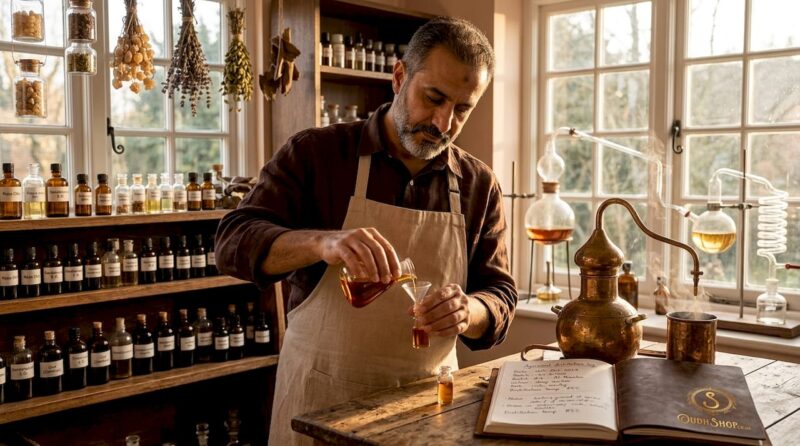
Oud, also called Agarwood, is a dark, fragrant resin that forms inside the heartwood of Aquilaria trees. Here is the remarkable part: the resin only develops when the tree becomes infected by a specific fungus, triggering a natural defence response that produces an extraordinarily rich, complex aroma. Not every Aquilaria tree produces it. In fact, only a tiny fraction do, which explains its legendary rarity and soaring price.
Why is oud so rare and costly?
- Aquilaria trees take decades to mature before resin can form
- Only infected trees produce resin, and infection rates are naturally low
- Wild Aquilaria trees are now endangered in many regions
- The extraction process is painstaking, requiring expert distillation
- Global demand has surged dramatically over the past two decades
Oud is, by weight, one of the most expensive natural raw materials used in perfumery, often surpassing the value of precious metals.
The cultural importance of oud within the Middle East is profound. In countries such as Saudi Arabia, the UAE, and Oman, burning oud chips (known as Bakhoor) to perfume homes and clothing is a centuries-old tradition tied to hospitality, celebration, and spiritual practice. It is not merely a scent; it is a symbol of generosity and prestige.
In Western perfumery, oud has enjoyed a remarkable rise since the early 2000s. Luxury houses began weaving it into fine fragrances, introducing its smoky, animalic warmth to entirely new audiences. Today, exploring the luxury of authentic oud perfumes reveals just how vast and nuanced this world has become.
| Oud type | Source | Scent character | Price range |
|---|---|---|---|
| Wild natural oud | Aquilaria trees (wild) | Intensely woody, animalic, complex | Very high |
| Cultivated oud | Farmed Aquilaria trees | Softer, cleaner, consistent | High |
| Blended/synthetic oud | Lab-created or diluted | Accessible, varied, wearable | Moderate to low |
The sheer breadth of oud expressions means that even if one variety feels too intense, another will feel perfectly suited to you.
Essential preparations: knowing your preferences and what to expect
Now that you know what oud is, it is important to get ready for your first experience by clarifying preferences and grasping the variety on offer.
One of the most liberating realisations for any oud newcomer is understanding that oud is not one singular scent. It exists on a wide spectrum, from wild and primal to delicate and floral. Knowing where you might sit on that spectrum before you start shopping saves both time and money.
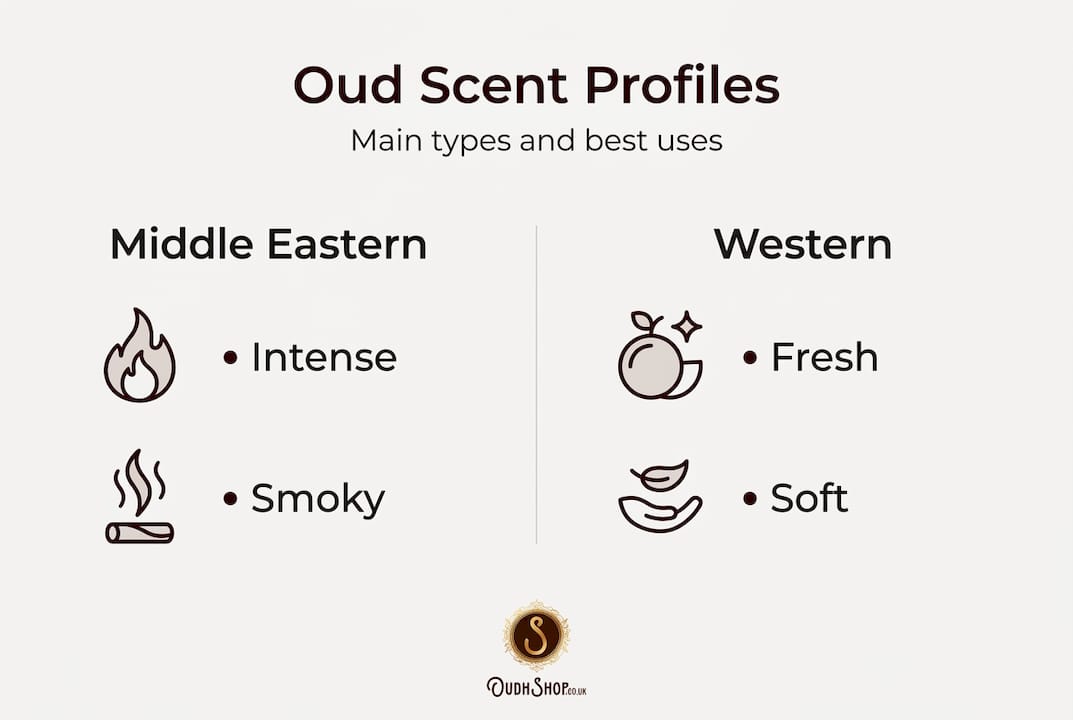
Middle Eastern versus Western oud: what to expect
| Style | Character | Best for |
|---|---|---|
| Traditional Middle Eastern | Intense, smoky, resinous, animalic | Purists, occasion wear, connoisseurs |
| Western/blended | Fresh, lighter, floral or citrus-infused | Beginners, everyday wear, sensitive noses |
| Modern fusion | Creative, gourmand or spicy, approachable | Adventurous beginners |
Western perfumery tempers oud’s intensity with fresh or floral notes, making it genuinely accessible for beginners. This is not a compromise; it is simply a different artistic vision. Brands like Tom Ford and Jo Malone have built entire oud lines around this accessible philosophy.
Before sampling, ask yourself a few honest questions:
- Do you currently prefer warm, spicy scents, or lighter, fresher ones?
- Are you drawn to long-lasting base notes, or do you prefer brighter top notes?
- Will you wear this to work, on evenings out, or for special occasions?
- What is your realistic budget for a signature fragrance?
Understanding your existing preferences helps you shortlist oud profiles that feel natural rather than jarring. You might also explore oud perfume trends in 2026 to see which styles are capturing attention right now, or use a dedicated guide to find your signature scent and narrow down your options intelligently.
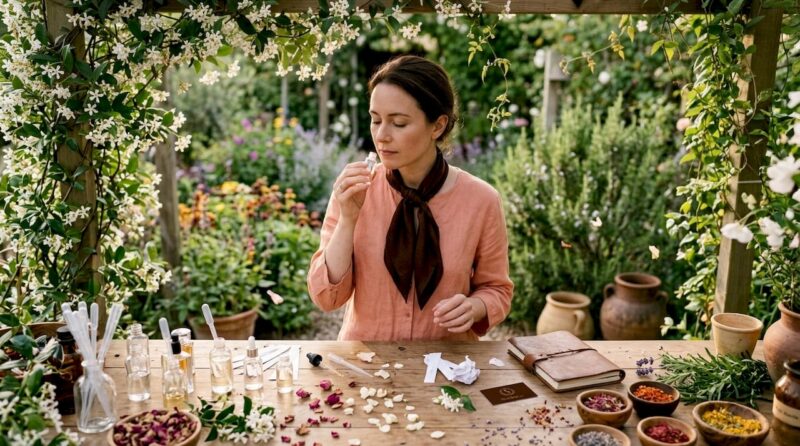
Expect your first oud experience to be surprising. Even a Western-style blend carries warmth that lingers far longer than most mainstream fragrances. Allow the scent to develop on your skin over several hours before forming a firm opinion, since oud is built on evolving base notes rather than immediate top-note impressions.
Step-by-step: how to explore and choose your first oud scent
With groundwork in place, you are ready to start exploring. Here is how to sample and select the right oud fragrance, step by step.
-
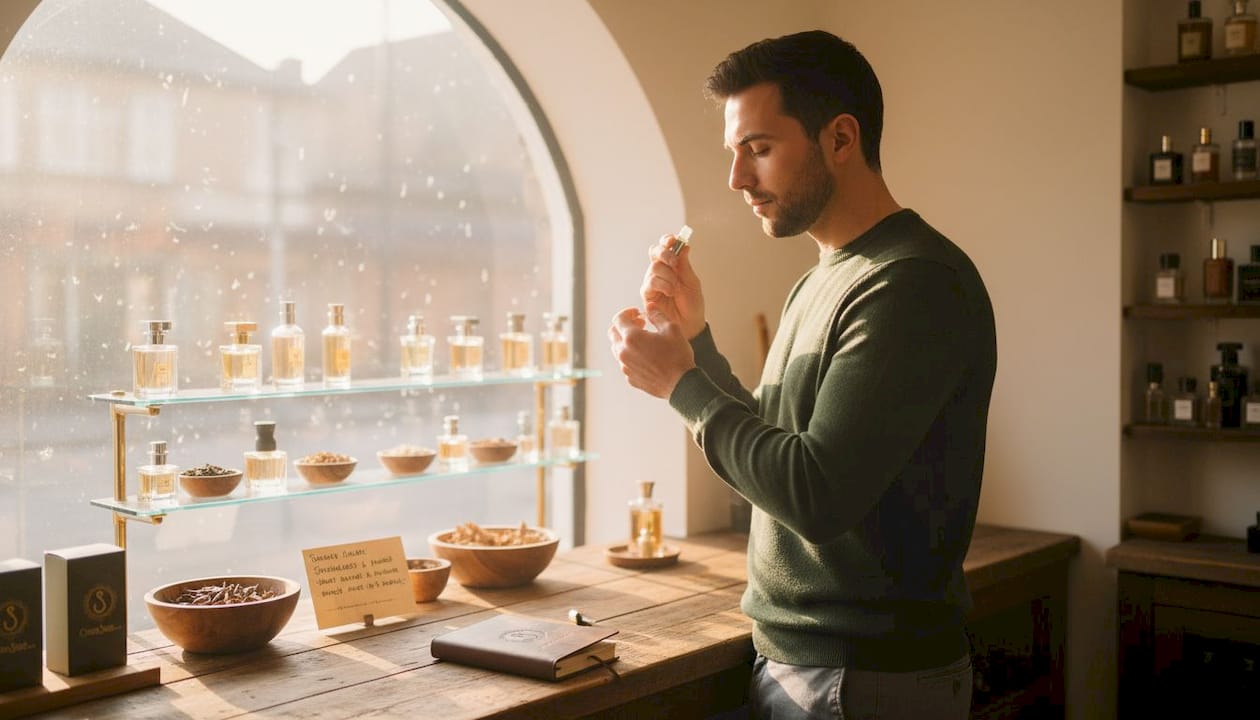
Start with sampler or tester sets. Before committing to a full bottle, always sample. Many retailers offer discovery kits, allowing you to test several profiles at home over days rather than rushed moments in a shop.
-
Apply to skin, not paper strips. Spray or dab a small amount on your inner wrist or the inside of your elbow. Skin chemistry transforms how oud smells, so paper testing alone will mislead you.
-
Wait for the dry-down. Oud’s character emerges slowly. The opening (top notes) may be sharp or woody, but give the fragrance at least 30 minutes to settle into its heart and base notes before deciding.
-
Compare profiles side by side. Test no more than two or three fragrances per session to avoid nose fatigue. Focus your early exploration on beginner-friendly profiles: woody and balanced, fresh and citrus-led, or sweet and creamy.
-
Consider beginner-friendly references. Well-regarded starting points include Tom Ford Oud Wood (balanced and woody), Jo Malone Oud & Bergamot (fresh and uplifting), Acqua di Parma Oud (citrus-bright), and Lattafa Oud Mood (affordable and sweetly approachable).
-
Read the concentration label. An Extrait de Parfum or Parfum concentration is far more potent than an Eau de Parfum. Beginners often fare better starting with lighter concentrations.
-
Follow a structured approach. A clear oud fragrance selection process can guide you from initial testing all the way through to confident purchase, removing much of the guesswork involved.
Pro Tip: If your budget is limited, do not overlook affordable alternatives. An affordable oud fragrance guide can reveal excellent value scents that rival much pricier options in wearability and sillage.
- Look for oud blended with sandalwood or vanilla for warmth without intensity
- Seek bergamot or pink pepper pairings for a fresher, more modern feel
- Avoid starting with raw or undiluted oud oils if you are entirely new to the ingredient
Common mistakes and how to avoid them
As you immerse yourself in oud, it is easy to make mistakes. Being aware of these pitfalls will help you navigate confidently.
The most common error is over-application. Because oud is so unfamiliar, many newcomers assume they cannot smell it and keep spraying. The result is an overwhelming cloud of scent that becomes difficult to wear. With oud, one or two sprays is almost always sufficient.
“Less is more” is not just a design principle. In perfumery, restraint allows oud’s complexity to genuinely shine rather than overwhelm.
Another frequent mistake is dismissing all oud as overpowering after a single encounter. If a particularly intense natural oud left you cold, that experience does not define the entire category. Purists favour natural oud for its meditative depth, while modernists prefer blends for everyday wearability and sustainability. Both are entirely valid perspectives.
Mistakes to avoid as a beginner:
- Testing too many fragrances in a single session (more than three causes nose fatigue)
- Judging a fragrance within the first five minutes rather than waiting for the dry-down
- Assuming a higher price always means better quality or greater personal compatibility
- Dismissing Western or synthetic blends as inferior without giving them a fair try
- Applying oud to freshly washed skin without moisturiser (dry skin absorbs scent less effectively)
Pro Tip: If a natural oud feels too intense, backtrack to a lightly blended version. Exploring premium oud perfume in the UK means you will find carefully crafted blends that make the ingredient approachable without sacrificing its essential soul.
Patience is genuinely your greatest asset here. Give yourself several weeks of exploration before settling on a signature scent. Your nose adapts, your preferences sharpen, and what felt strange at first often becomes irresistible with familiarity.
Our perspective: what most guides miss about discovering oud
Taking in all the practical advice, let us reframe oud discovery and set realistic, enjoyable expectations.
Most guides treat oud discovery as a quest for a single perfect fragrance, as though arriving anywhere short of a pure, aged Agarwood Extrait de Parfum represents failure. We believe this framing actively harms beginners. It replaces genuine pleasure with unnecessary anxiety.
The honest truth is that fragrance taste evolves. What you love at the start of your oud journey will almost certainly differ from what you cherish two years later. That is not a flaw; it is the beauty of this world. Contrasting views exist between purists who seek meditative depth and modernists who value wearability and sustainability, and neither camp is wrong.
If a bright, citrus-infused Western oud is what you reach for daily, that is your signature scent, full stop. No apology required. We encourage every beginner to start with a guide to oud and Arabian perfumes as a reference, but to trust their own instincts above all. Pleasure, not prestige, is the only standard that matters.
Ready to discover your signature oud scent?
Inspired to experience oud for yourself? Here is where to start your journey.
At Oudh Shop, we have curated everything you need to begin exploring oud with confidence and without committing to a full bottle before you are ready.
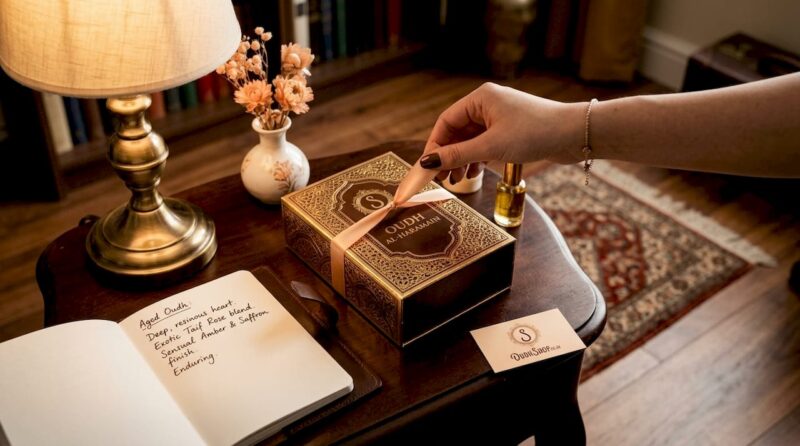
Browse our full Oud Perfumes collection to discover everything from classic Middle Eastern Agarwood blends to modern Western-inspired creations. Not sure where to begin? Our intuitive Perfume Finder tool asks the right questions to match you with your ideal profile in minutes. We also offer carefully assembled perfume tester sets so you can sample several fragrances at home before making your choice. Your signature scent is waiting.
Frequently asked questions
What does oud smell like for beginners?
Oud typically delivers a rich, woody warmth with hints of sweetness or smokiness, though Western blends add freshness or floral softness to make the experience more immediately approachable for new wearers.
How should I try oud if I’m sensitive to strong scents?
Start with a single light application of a citrus or fresh oud blend on your wrist, and consider using perfume testers such as Jo Malone Oud & Bergamot or Acqua di Parma Oud before investing in a full bottle.
Are expensive ouds always better?
Not at all. Accessible blends such as Lattafa Oud Mood offer impressive quality and wearability, making them ideal for beginners who want to explore oud without a significant financial commitment upfront.
Is natural oud oil better than synthetic or blended versions?
Natural oud provides deeper, more layered aromas, but synthetics and blends deliver greater daily wearability and are a more sustainable choice, which is why many beginners and even seasoned enthusiasts actively prefer them.
Why is oud sometimes called ‘liquid gold’?
Oud earns the title ‘liquid gold’ because of its exceptional rarity, the demanding extraction process required to produce it, and the unparalleled complexity of its luxurious, multi-layered scent profile.
Recommended
- Find your signature scent: a guide to oud and Arabian perfumes
- Oud fragrance selection: 8 steps for 12-hour authentic wear
- Oud vs amber fragrances: how to choose your signature scent
- Discover the best oud attar: a guide for fragrance lovers
- Step-By-Step Guide to Choosing Scented Candles Easily – mi KALMA