Luxury Arabian Oud Perfume Blog: Your Guide to Exquisite Fragrances
What is perfume sillage? A guide for fragrance lovers
TL;DR:
- Perfume sillage is the invisible trail of fragrance left behind as you move, reflecting social presence. It depends on molecular composition, movement, and environmental factors, not just scent strength or projection. Understanding and enhancing sillage allows you to leave a memorable, subtle fragrance impression tailored to your lifestyle.
You apply a beautiful fragrance, step out the door, and someone across the room turns their head as you pass. That invisible magic has a name: sillage. Pronounced see-yazh, this is one of the most misunderstood concepts in perfumery, and knowing what is perfume sillage can genuinely transform how you choose, wear, and appreciate fragrance. Many assume a loud scent automatically has great sillage, but as you will discover, sillage is something altogether different, shaped by chemistry, movement, and the artistry of a perfumer’s formulation.
Table of Contents
- What is perfume sillage and why it matters
- The science behind sillage: how perfumes travel
- Distinguishing sillage from projection and longevity
- How to test and enhance sillage in real life
- Rethinking sillage: why it matters beyond scent strength
- Explore perfumes with captivating sillage at Oudh Shop
- Frequently asked questions
What is perfume sillage and why it matters
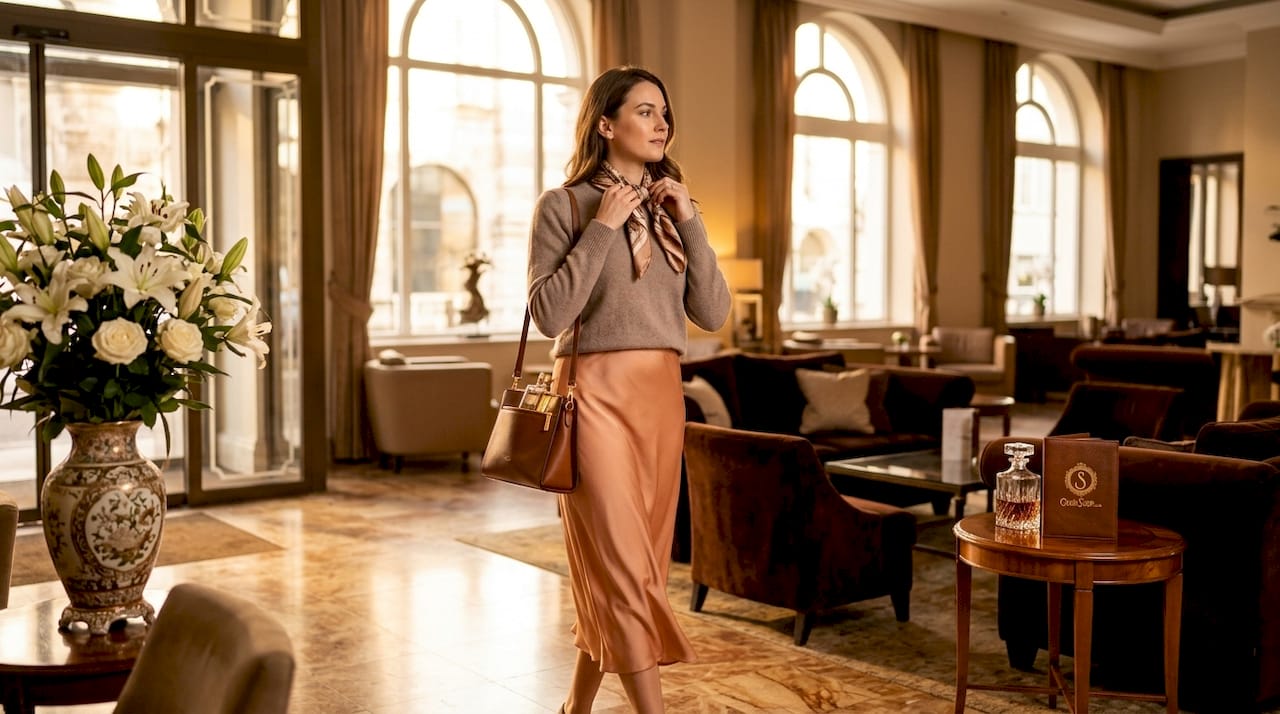
The word sillage is borrowed from French, where it describes the wake left behind a boat moving through water. In perfumery, it carries precisely that meaning: the scented trail left in the air as you move through a space, rather than the scent hovering around you while you stand still. It is the invisible ribbon of fragrance that lingers in a corridor after you have walked down it, or the gentle cloud that remains when you remove your coat in a warm room.
Why does this distinction matter? Because sillage is fundamentally about social presence. When someone remembers you by your scent long after you have left a room, that is sillage at work. It is not merely about smelling good to yourself; it is about the olfactory impression you leave on the world around you. This is why serious fragrance enthusiasts regard sillage as one of the most expressive qualities a perfume can possess.
It is worth clarifying a few terms that are often conflated:
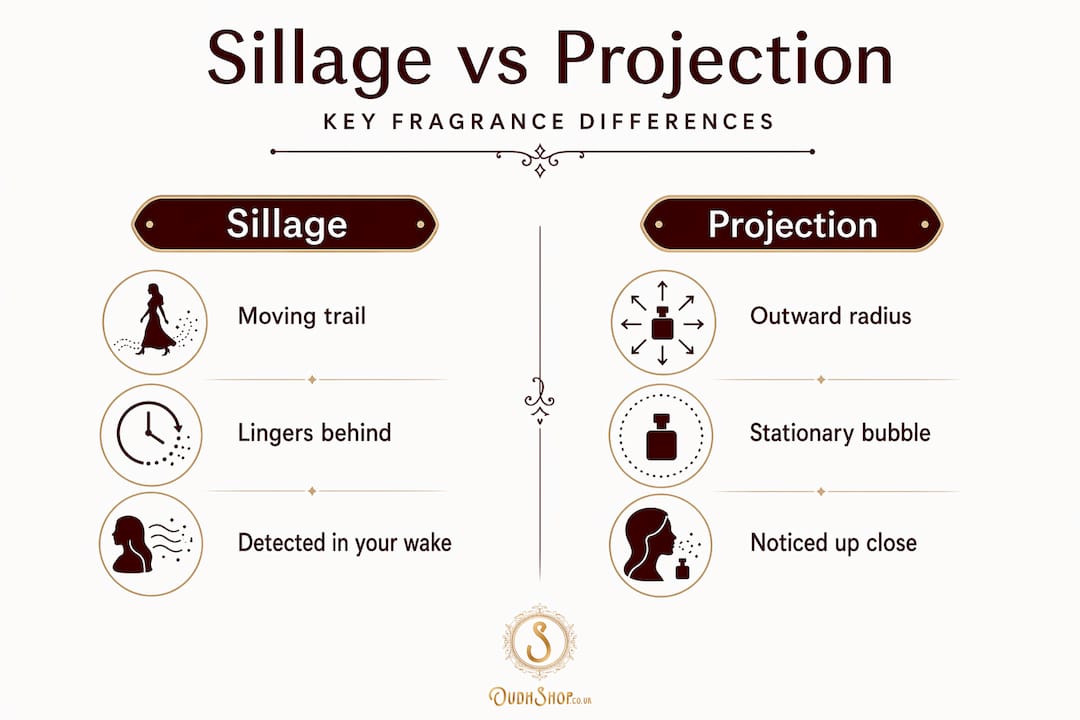
- Sillage: the scented trail your fragrance leaves behind as you move
- Projection: the radius of scent emanating from your body while you are stationary
- Longevity: how long the fragrance remains perceptible on your skin over time
To understand the full range of these qualities, it helps to also understand perfume categories, since concentration levels, from Eau de Cologne through to Extrait de Parfum, play a significant role in how sillage manifests.
| Perfume quality | What it measures | How it is experienced |
|---|---|---|
| Sillage | Trail left during movement | Others smell you after you have passed |
| Projection | Radial scent while stationary | Others smell you nearby |
| Longevity | Duration on skin | How long you still smell it |
“Sillage is not simply volume. It is architecture. A masterfully formulated fragrance can leave an exquisite trail with barely a whisper of strength on skin.”
The science behind sillage: how perfumes travel
A fragrance is not a single substance but a carefully constructed accord of volatile molecules, each evaporating at a different rate. The familiar pyramid of top, middle, and base notes is, in essence, a timeline of evaporation. Top notes lift away within minutes; base notes can cling to fibres and skin for hours. Sillage depends on the interplay between all of these, and in particular on how molecules detach from skin and disperse into the air, influenced by their molecular weight, volatility, and your body’s own chemistry.
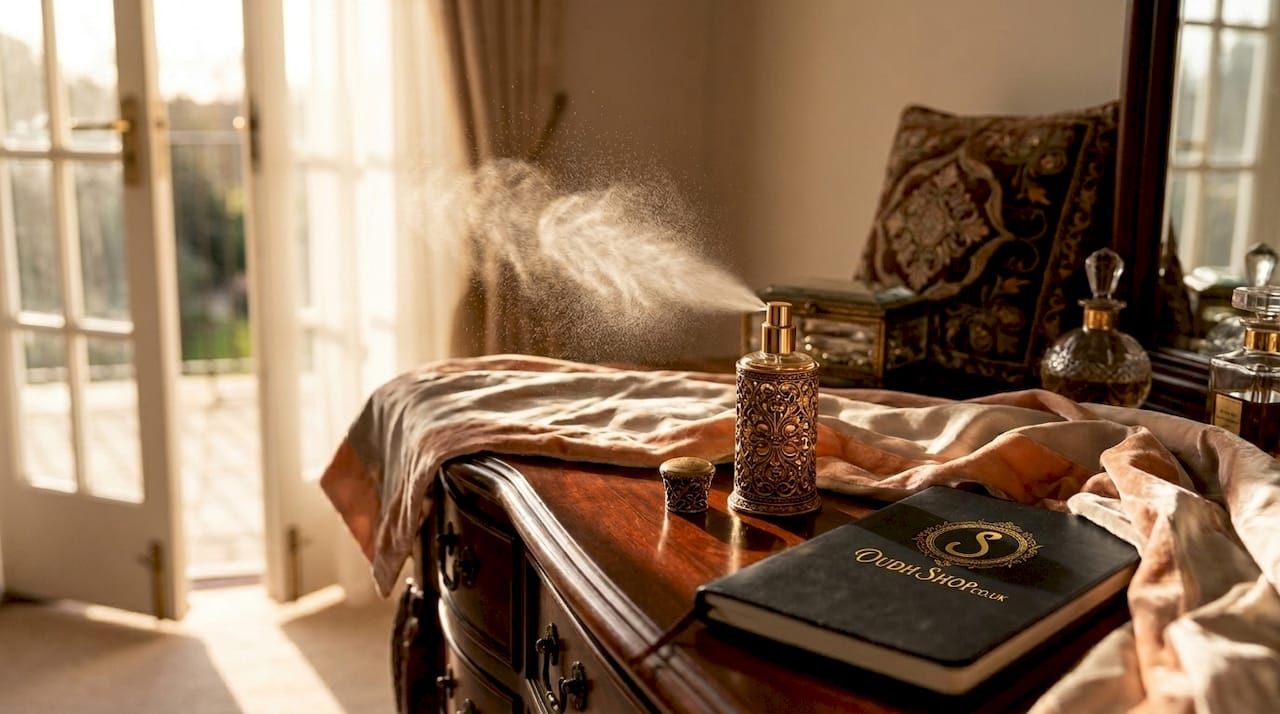
When you walk, you create a slipstream of air around your body. Fragrance molecules, particularly lighter ones, become entrained in that airflow and are carried behind you, forming the trail. Heavier base note molecules, such as those found in rich oud, labdanum, or sandalwood, tend to diffuse more slowly but linger longer in that trail, creating depth and tenacity.
Environmental conditions matter enormously here. Warm skin accelerates evaporation and enhances diffusion, which is why a perfume can smell more prominent in summer or after exercise. Humidity, too, plays a role: a moist atmosphere can carry scent particles further and more persistently than dry air. Cold, dry conditions often suppress sillage noticeably.
Key factors that shape sillage:
- Molecular weight and volatility of individual fragrance materials
- Skin temperature and level of hydration
- Fragrance concentration (Extrait de Parfum versus Eau de Toilette, for instance)
- Specific ingredients: musks, woody ambers, and certain florals are renowned diffusers
- Movement speed and environmental airflow
To accurately observe sillage, follow these steps:
- Apply your fragrance as you normally would, allowing it to dry down for at least ten minutes.
- Walk through a room at your usual pace and then exit.
- Ask someone else to enter the room shortly after you leave and note whether they detect your fragrance.
- Alternatively, remove a scarf or jacket and hold it at arm’s length; the scent clinging to the fabric is a good proxy for sillage quality.
- Repeat under different conditions (warm versus cool room, humid versus dry day) to observe how the trail shifts.
Pro Tip: A single spray on a static wrist tells you almost nothing about sillage. True sillage assessment requires movement and observation, which is why in-store testing so often misleads buyers.
Distinguishing sillage from projection and longevity
Understanding the precise difference between these three qualities is, frankly, what separates a casual fragrance wearer from someone who truly knows their collection. Many aficionados discover this distinction only after years of purchasing and wondering why a perfume that smelled magnificent in the shop somehow disappointed in daily wear.
Consider two contrasting examples. A heavy, resinous Extrait de Parfum built on dense oud and amber may project powerfully in close proximity, creating an almost tangible aura around the wearer, and yet leave only a gentle, intimate trail. Conversely, a lighter Eau de Parfum built around airy musks and white woods might not announce itself boldly in a room but will leave a captivating, lingering ribbon in its wake as you move. These are genuinely distinct qualities that a perfumer can engineer independently.
| Quality | Stationary vs moving | Social context |
|---|---|---|
| Projection | Stationary | Noticed by those near you |
| Sillage | Moving | Noticed by those after you |
| Longevity | Both | How long the experience lasts |
A perfume can score brilliantly on longevity but trail discreetly, making it ideal for intimate settings or professional environments where subtlety is valued. Another may have moderate longevity but a wide, generous sillage, better suited to social events and evenings out. Choosing between them is not a matter of which is superior but which suits your lifestyle and preferences.
Questions to ask yourself when assessing a fragrance’s sillage for your needs:
- Do you want to be remembered in a room after you leave, or noticed only when standing close?
- Is your environment formal or social, confined or open-air?
- Do you prefer a private, skin-close scent or a signature that precedes and follows you?
How to test and enhance sillage in real life
Now that the theory is clear, the practical application matters just as much. Many fragrance lovers make the same avoidable mistakes when testing sillage, primarily by assessing a perfume without any movement or by judging it entirely from close range on a sprayed wrist.
Practical steps to test sillage accurately:
- Apply the fragrance to your pulse points: wrists, neck, and inner elbows.
- Wait at least fifteen minutes for the top notes to settle and the heart to emerge.
- Walk briskly through a neutral-smelling space, such as a hallway or open room.
- Stop and turn around; if you can detect a trail hanging in the air behind you, sillage is present and notable.
- Have a friend enter the same space immediately after you and ask for their honest impression.
Techniques to enhance sillage with fragrances you already own:
- Moisturise your skin before application; well-hydrated skin holds fragrance molecules and releases them more generously into the air
- Apply to warm areas: the neck, chest, and inner wrists benefit from body heat, which drives diffusion
- Layer your fragrance with a matching or complementary body oil or lotion to extend the trail
- Store fragrance away from heat and light to preserve the integrity of volatile top notes, which contribute to initial sillage
- Consider the season and environment: in cooler, drier months, apply slightly more generously to compensate for reduced diffusion
Pro Tip: Ambient temperature and humidity affect how your perfume projects more than most people realise. A fragrance that trails beautifully in a warm, crowded venue may seem to disappear outdoors on a cold winter evening. Adapt your application strategy to the occasion rather than treating every situation identically.
Ingredients worth seeking if you prize generous sillage include synthetic musks (such as Iso E Super and cashmeran), woody ambers, aromatic resins, and oud. These materials are renowned for their diffusive qualities and their ability to cast a graceful, long-reaching trail.
Rethinking sillage: why it matters beyond scent strength
There is a persistent assumption in fragrance circles that more is more: the stronger the spray, the greater the impact. It is an understandable instinct but, in our experience, one that misses the point of sillage entirely.
Sillage is not about loudness. It is, as the science illustrates, about how a fragrance moves, evolves, and leaves a memory behind. Some of the most powerful olfactory impressions come from perfumes that are barely detectable on the wearer’s own skin yet leave an unmistakable, almost ghostly trail in their wake. That subtlety is a form of mastery, not a flaw.
Think of sillage as the fragrance equivalent of a compelling presence. A person who commands a room does not necessarily speak loudly; they carry themselves with intention, and something about their energy lingers after they have gone. A perfume with exquisite sillage works the same way. It marks your passage without announcing it. It creates association and memory in others without overwhelming them.
This is why we encourage fragrance lovers to stop chasing strength as the primary measure of a perfume’s worth and begin to ask a more interesting question: what kind of trail do I want to leave? Choosing a signature scent through the lens of sillage means choosing how you want to be remembered, not just how you want to smell. That is a far more personal and rewarding way to build a fragrance wardrobe.
Explore perfumes with captivating sillage at Oudh Shop
Understanding sillage transforms the way you shop for fragrance, and at Oudh Shop, we believe every scent in our collection should leave something worth remembering.
Our curated range of oud perfumes and Arabian fragrances is built around ingredients renowned for their extraordinary sillage: rich agarwood, velvety musks, smoky resins, and vibrant woods that move with you through the day and linger beautifully in your wake. Not sure where to begin? Use our Perfume Finder tool to discover fragrances matched to your sillage preferences and note profile. Once you have found your favourites, our perfume application guidance will help you unlock the full depth of every bottle you own.
Frequently asked questions
What is the difference between sillage and projection in perfume?
Sillage is the scented trail your fragrance leaves behind as you move through a space, while projection is the distance scent radiates from your body when you are standing still. They are related but measure entirely different aspects of a perfume’s performance.
How can I test a perfume’s sillage accurately?
Walk through a neutral room after applying your fragrance, then stop and assess the air behind you, or ask someone to enter the space immediately after you leave. Testing sillage requires movement, not simply sniffing a sprayed wrist while standing still.
Does a stronger scent mean better sillage?
Not at all. Sillage depends on how fragrance molecules diffuse and travel through air, which is shaped by formulation and ingredients rather than raw strength. A strong scent on skin does not guarantee a generous or lasting trail.
What factors affect perfume sillage?
Sillage is shaped by fragrance concentration, the specific ingredients used, your individual skin chemistry, and environmental conditions. Factors including temperature, humidity, and application technique all play a measurable role.
Can I increase the sillage of my existing perfume?
Yes. Applying to warm, hydrated skin improves diffusion significantly, and layering with a complementary body oil can extend and enrich the trail your fragrance leaves behind.