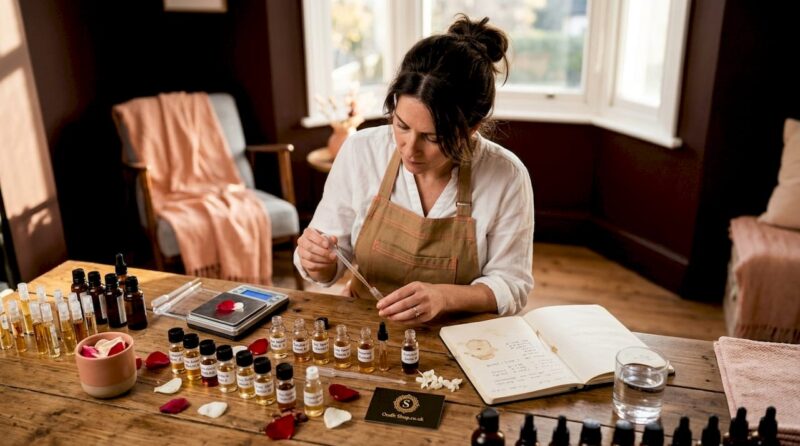
Luxury Arabian Oud Perfume Blog: Your Guide to Exquisite Fragrances
Arabian attar application workflow: the complete guide
TL;DR:
- Most attar users experience significant scent loss before their fragrance fully blooms due to improper application rituals. Proper preparation, layering, and dabbing without rubbing are essential to maximize scent projection and longevity. Following traditional Arabian perfumery practices enhances the experience, transforming attar into a purposeful and personal art form.
Most attar users lose half their fragrance before it even has a chance to bloom. They dab on a precious oil, rub their wrists together out of habit, and wonder why the scent fades within an hour. The arabian attar application workflow is not simply about where you apply a perfume oil. It is a layered ritual, shaped by centuries of Gulf perfumery tradition, that transforms a few drops of liquid gold into a living, evolving scent experience. This guide walks you through every step, from skin preparation to the final flourish of Bakhoor smoke, so your attar performs exactly as it was crafted to.
Table of Contents
- Key takeaways
- The arabian attar application workflow: before you begin
- Step-by-step attar application technique
- Common attar application mistakes to avoid
- Enhancing your fragrance with traditional Arabian rituals
- My perspective on mastering the attar ritual
- Discover authentic attars at Oudhshop
- FAQ
Key takeaways
| Point | Details |
|---|---|
| Prepare skin before applying | Clean, moisturised skin absorbs attar deeply and projects scent more effectively throughout the day. |
| Target pulse points precisely | Apply attar to wrists, behind ears, jawline, and hair tips for maximum warmth and projection. |
| Never rub pulse points | Dabbing rather than rubbing preserves delicate scent molecules and maintains the fragrance’s full arc. |
| Layer for depth and longevity | Combine a base lotion, musk oil, and attar in sequence to build a rich, multi-dimensional scent profile. |
| Store attar correctly | Keep bottles sealed, upright, and away from heat and light to protect the oil’s integrity over time. |
The arabian attar application workflow: before you begin
Getting the application right starts well before the first drop of oil touches your skin. Think of this stage as setting the stage for a performance. If the conditions are wrong, even the most exquisite attar will not reach its full potential.
What you will need
Gathering your materials in advance keeps the ritual deliberate and unhurried, which is very much in the spirit of Arabian perfume culture.
- Attar oil — your chosen single-note or blended perfume oil (rose, oud, musk, amber, or a layered composition)
- Unscented body lotion or a light carrier oil — jojoba or sweet almond oil work beautifully as a base to anchor the attar
- A traditional glass dipping stick or clean fingertip — for precise, drop-by-drop application
- Bakhoor and an incense burner — optional but deeply rewarding for clothing application
- Scented lotion or matching musk oil — for layering, following Arabian tradition
| Material | Purpose |
|---|---|
| Attar oil | The primary fragrance concentrate |
| Unscented lotion or carrier oil | Moisturises skin and extends wear time |
| Dipping stick or fingertip | Controls the amount applied per pulse point |
| Matching musk or oud oil | Adds depth as a mid-layer in the ritual |
| Bakhoor incense | Infuses clothing with ambient, lasting scent |
Preparing your skin
Clean, moisturised skin free from competing fragrances is the single most important preparation step. Shower beforehand if possible, using an unscented or mildly scented body wash, and follow with an unscented lotion while your skin is still slightly warm. Hydrated skin has more surface area for the oil to grip, which means better absorption and a more generous, sustained sillage.
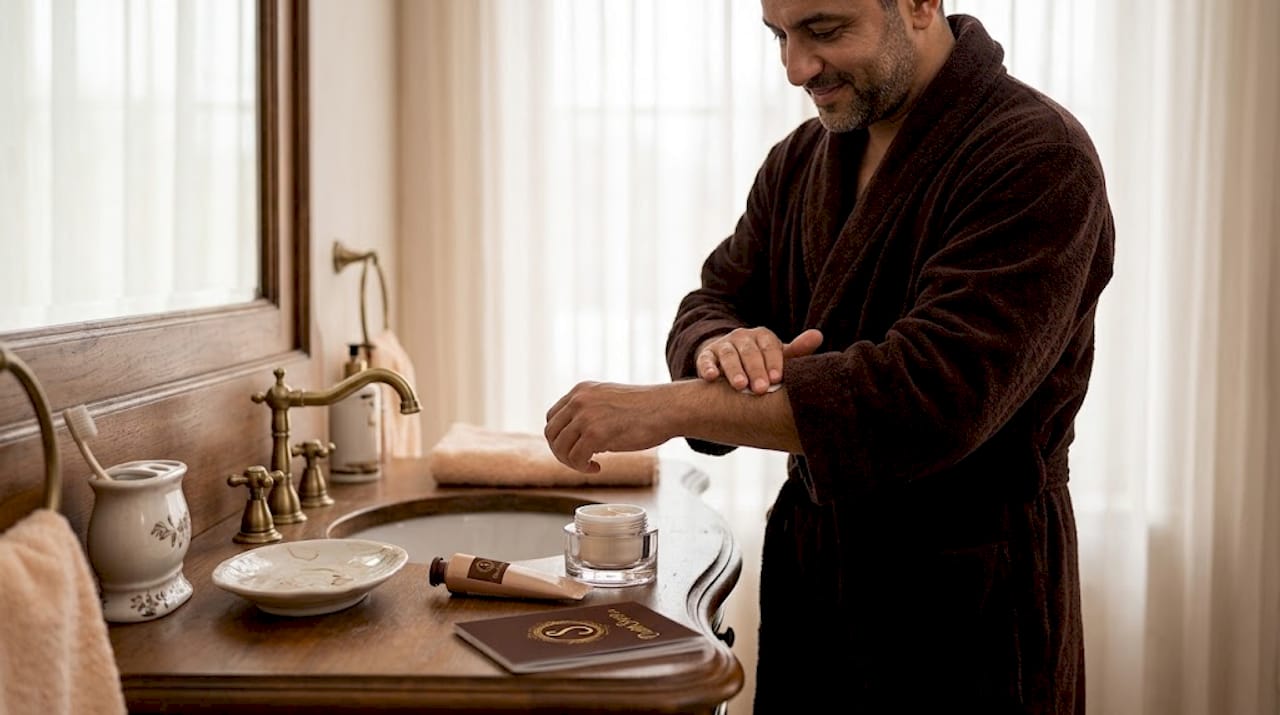
Avoid applying attar over skin that still carries the residue of another perfume. Competing fragrance compounds interact unpredictably, muddying the beautiful top-to-base evolution your attar is designed to deliver.
Pro Tip: Apply your unscented moisturiser about five minutes before your attar. This gives the lotion time to sink in, leaving a perfectly primed, slightly tacky surface that holds the oil without diluting it.
Step-by-step attar application technique
The cultural context of scent architecture in Arabian perfumery frames application not as a single act but as a construction. Each element is placed with intention, building toward an experience that unfolds over hours.
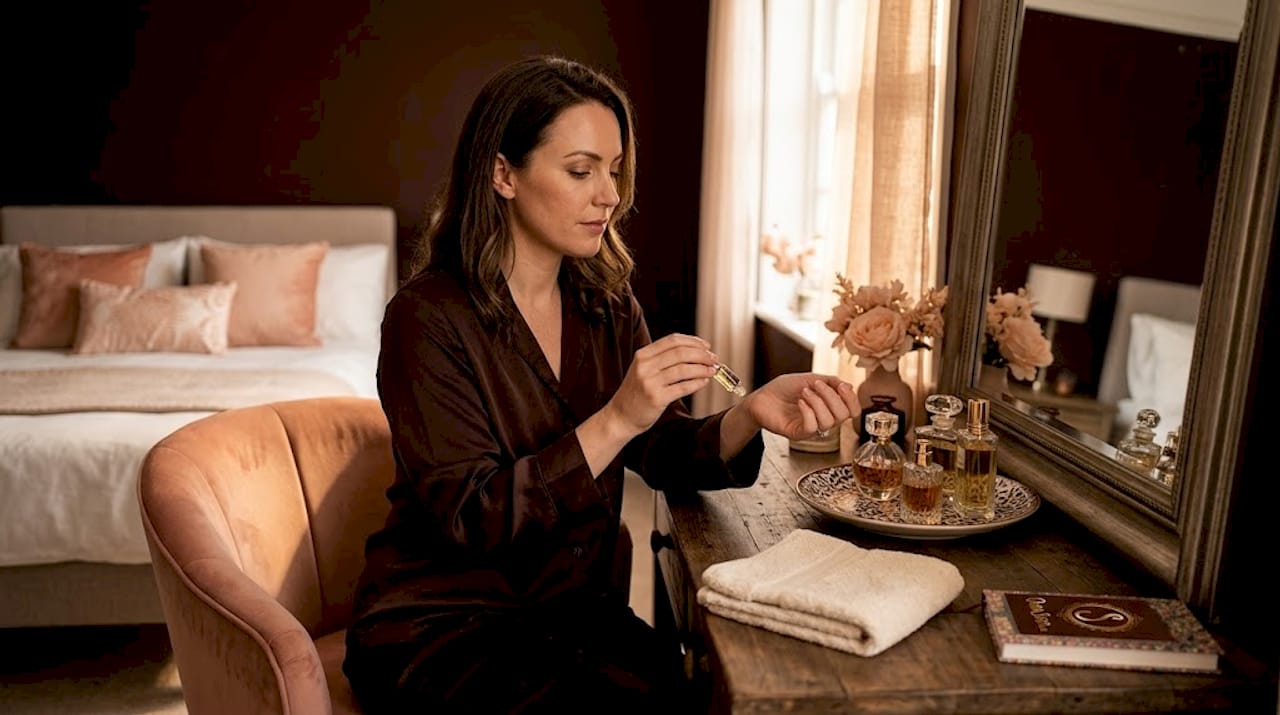
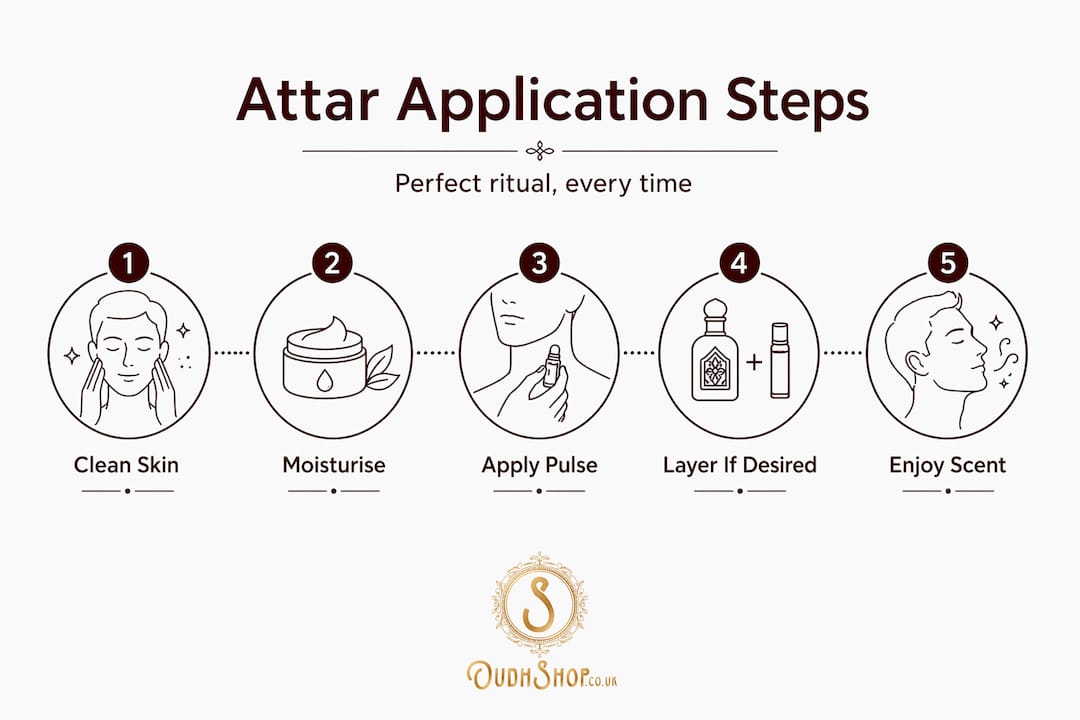
Start with a base layer. Apply your unscented lotion or a few drops of carrier oil to your main pulse points: the inside of both wrists, the inner elbows, behind the ears, and the base of the throat. This is your foundation.
Add a musk or oud oil as your middle layer. Layering with compatible products builds fragrance depth and longer wear without overwhelming the senses. Apply just one or two drops of a light musk oil over the moisturised areas, dabbing gently without rubbing.
Apply your main attar. Use the dipping stick or the bottle’s built-in applicator to place a single, small drop on each chosen pulse point. Recommended application areas include the wrists, behind the ears, the jawline, and the very tips of the hair, where warmth is consistent and scent diffuses beautifully.
Dab, do not rub. This is the step most people get wrong. Rubbing your wrists together crushes the fragrance molecules responsible for the top notes, which means the attar skips its opening act entirely and heads straight to the base. Let the oil settle by pressing pulse points together softly, or simply leave them to dry naturally.
Apply a small amount to the hair and beard, if applicable. Hair holds scent exceptionally well because it lacks the body heat that burns through top notes quickly. A single dip of the stick drawn lightly through the ends of your hair or along a beard creates a soft, trailing sillage as you move.
Finish with Bakhoor on your clothing. Hold a garment loosely over Bakhoor smoke for ten to fifteen seconds. Bakhoor smoke on clothes enriches scent complexity and longevity, weaving an ambient warmth around you that the skin-applied attar alone cannot replicate.
Pro Tip: Perfume oils behave cinematically on skin, unfolding in phases influenced by individual chemistry. Give your attar at least twenty minutes after application before judging the scent. The opening may surprise you, but the heart and base are where the real artistry lives.
Common attar application mistakes to avoid
Even experienced attar enthusiasts make errors that quietly undermine the fragrance. Recognising these is the fastest way to improve your technique.
Over-applying. Attar is a concentrated perfume oil, vastly more potent than an Eau de Toilette. More than three or four drops across all your pulse points combined is almost always too much. Excessive application reduces attar effectiveness and may cause skin irritation, particularly for those with sensitive skin.
Rubbing pulse points together. This is the most widespread mistake in attar use, and it is completely understandable given how ingrained the habit is with alcohol-based sprays. With oil-based attars, the friction heats and degrades the lighter aromatic compounds, collapsing the fragrance’s opening notes instantly.
Applying to dry, unwashed skin. Dehydrated skin absorbs oil too quickly, meaning the scent sinks in rather than radiating outward. Dirty skin introduces odour compounds that alter the attar’s chemistry.
Mixing incompatible scents in a single application. Wearing a rose attar layered over a petrichor or green fragrance, for example, creates dissonance rather than depth. Study your attar’s fragrance family and layer within it or with complements, such as musk under rose, or oud under amber.
Refreshing by re-applying a different attar mid-day. If the scent has faded and you want to refresh, reapply the same attar in a small amount to a fresh area rather than layering a new fragrance on top of old base notes. This preserves the coherence of your scent signature.
Enhancing your fragrance with traditional Arabian rituals
The arabian attar application workflow does not end at the skin. Arabian perfume culture has always understood that scent is an atmosphere, not just a personal accessory. These complementary methods extend and enrich what you have applied.
Arabs layer perfumes with oud oil and use incense on clothing to create genuine depth in fragrance, and this philosophy shapes every recommendation below.
| Method | Effect | Best occasion |
|---|---|---|
| Bakhoor on abaya or thobe | Ambient smoky warmth, lasts all day | Formal gatherings, evening wear |
| Attar on silk scarf or hijab | Sustained, trailing sillage | Everyday wear, travel |
| Layered musk under rose attar | Sensual, rounded floral depth | Romantic occasions |
| Matching scented body lotion | Extended longevity on skin | Warm weather, outdoor events |
| Hair-tip application | Soft, diffused projection with movement | Social events, daily rituals |
Seasonal awareness matters. Warm, resinous attars such as oud, amber, and sandalwood project powerfully in cool autumn and winter weather. Light florals and fresh musks suit the warmth of spring and summer, when body heat already amplifies projection.
Occasion-specific layering. For a formal evening, combining a woody oud base with a floral attar and Bakhoor on clothing creates the multi-dimensional entrance that contemporary Arabian perfumes are architected to deliver: a clean, vibrant opening that resolves into warm, dense base notes over time.
How to store attar properly. Keep your attar bottles sealed tightly, stored upright, and away from direct light and heat sources. A cool, dark drawer or cabinet is ideal. Properly stored attar can retain its integrity for years, and some oud-based oils actually deepen and mature with age, much like a fine wine. Explore the D’Arabie full collection for beautifully crafted layering attars worth preserving long-term.
My perspective on mastering the attar ritual
I have spent years immersed in Arabian fragrance culture, and the single truth I keep returning to is this: most people underestimate the patience the ritual demands. The arabian attar application workflow is not difficult. But it is deliberate, and deliberateness is precisely what Western perfume habits have trained us away from.
The thing I find most people overlook, even those who already own beautiful attars, is the layering step. They apply the main attar directly to dry skin, admire the opening, and move on. What they never experience is what that same attar becomes when it is given a moisturised, musk-primed base to develop on. It is genuinely transformative.
I also want to say something about the cultural weight of this practice. When you follow the traditional Arabian perfumery ritual, you are not just applying a scent. You are participating in an art form that has been refined across generations of Gulf perfumers. That awareness changes how you wear it. It slows you down, makes you more intentional, and ultimately makes the fragrance more personal. Once you start thinking of your attar as a narrative you are wearing rather than a product you are using, the entire experience shifts.
My practical advice: start simple. Pick one attar you love, learn how it behaves on your skin across a full day, and master that before layering. You will understand it deeply enough to know exactly which musk or oud oil belongs beneath it.
— Oudh
Discover authentic attars at Oudhshop
If this guide has inspired you to deepen your attar practice, the next step is ensuring you are working with oils that reward the effort. At Oudhshop, every attar in our collection is selected for its depth, authenticity, and longevity, precisely the qualities that make the workflow above worth following.
Whether you are building your first layering collection or refining an existing ritual, our Arabian attar and oud range covers everything from single-note rose and musk oils to rich, complex oud compositions. For something perfectly portable, our travel-size attar collection lets you carry the full ritual wherever you go. If you are looking for a beautifully presented gift for a fragrance lover, our perfume gift sets are crafted for exactly those occasions. Next-day UK delivery is available across the full range.
FAQ
Where should you apply attar for the best results?
Apply attar to warm pulse points including the wrists, behind the ears, the jawline, and the base of the throat, as well as hair tips. These areas generate consistent heat that helps the oil diffuse and project throughout the day.
How many drops of attar should you use per application?
Two to four drops across all pulse points combined is sufficient for most attars. Concentrated perfume oils are far more potent than alcohol-based fragrances, and over-application can cause scent fatigue and skin irritation.
Why should you never rub your wrists after applying attar?
Rubbing generates friction and heat that degrades the lighter top-note molecules in the oil, causing the fragrance to skip its opening phase entirely. Dabbing or allowing the oil to dry naturally preserves the full scent arc.
What is the best way to layer Arabian attars?
Begin with an unscented moisturiser, follow with a compatible musk or oud oil, and finish with your chosen attar. This sequence builds depth and extends wear time without creating scent confusion between incompatible notes.
How should you store attar to keep it fresh?
Keep attar bottles sealed, stored upright, and away from heat and direct light. A cool, dark cabinet is ideal. Many oud-based attars actually improve with age when stored correctly, developing richer, more nuanced base notes over time.