Luxury Arabian Oud Perfume Blog: Your Guide to Exquisite Fragrances
Oud scent comparison workflow: choose with confidence

TL;DR:
- A practical oud scent comparison workflow helps transform scent overwhelm into informed choices by categorizing by scent family and intensity.
- It involves sampling from lighter to stronger profiles, recording impressions, and evaluating scent evolution over time on skin.
Standing in front of a display of oud fragrances, each one exquisite, each one pulling you in a different direction, is one of the more pleasurable forms of overwhelm. But overwhelm it remains. A practical oud scent comparison workflow transforms that confusion into clarity, helping you move from instinct to informed choice. Whether you are selecting a new signature scent or seeking a gift that will genuinely resonate, understanding how to compare oud fragrances purposefully is what separates a purchase you will treasure from one you will regret.
Table of Contents
- Key takeaways
- The oud scent comparison workflow: building your foundation
- A step-by-step oud fragrance workflow
- Mistakes to avoid when comparing oud perfumes
- Making confident final choices
- My perspective on what actually matters
- Discover oud at Oudhshop
- FAQ
Key takeaways
| Point | Details |
|---|---|
| Start with scent families | Categorise oud options by family (white, floral, smoked) before comparing individual fragrances. |
| Sample by increasing intensity | Work from lighter blends upward to avoid overwhelming your senses before you reach stronger profiles. |
| Assess scent evolution on skin | An oud fragrance can last 8 to 12 hours, so judge it across dry-down, not just on first contact. |
| Match intensity to occasion | Office wear demands a lighter oud; evening and formal settings suit richer, smokier expressions. |
| Use testers before committing | Travel-size or tester formats let you sample multiple profiles without purchasing full bottles upfront. |
The oud scent comparison workflow: building your foundation
Before you can compare oud fragrances meaningfully, you need to understand what you are actually comparing. Oud, also known as Agarwood, is the resinous heartwood of Aquilaria trees. The resin forms through infection, and the resulting oil carries wildly different aromatic profiles depending on the tree’s age, the region of origin, and how the oil was extracted or processed. This is why two oud fragrances sitting side by side can smell almost nothing alike.
The first practical step in any oud aroma analysis is understanding scent families. The three primary categories are:
- White oud: Clean, powdery, and approachable. Often blended with musk or florals, making it suitable for everyday wear and gifting to those new to oud.
- Floral oud: Rose, jasmine, or iris married with the woody base. Rich but not confrontational, and deeply popular for evening occasions.
- Smoked oud: The classic, heavyweight expression. Resinous, animalic, and commanding. Reserved for cooler months, evening settings, or those who already love oud deeply.
Alongside scent family, you need to define intensity tiers before you start comparing. Think of them as light (Eau de Toilette concentrations, citrus-oud blends), moderate (Eau de Parfum, balanced wood and resin), and strong (Extrait de Parfum or pure attar). Knowing which tier you are shopping within stops you from comparing a subtle office scent against a ceremonial oil, which is like comparing sparkling water to espresso.
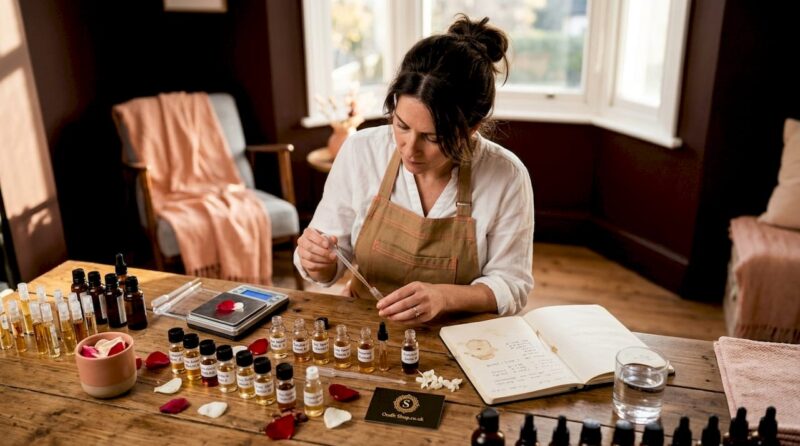
Before your first comparison session, gather your materials: blotter strips, a handful of candidate samples, and ideally a small container of coffee grounds to cleanse your palate between scents. If you are exploring at home, you can explore oud aroma profiles to pre-identify which families appeal to you most before committing to physical samples.
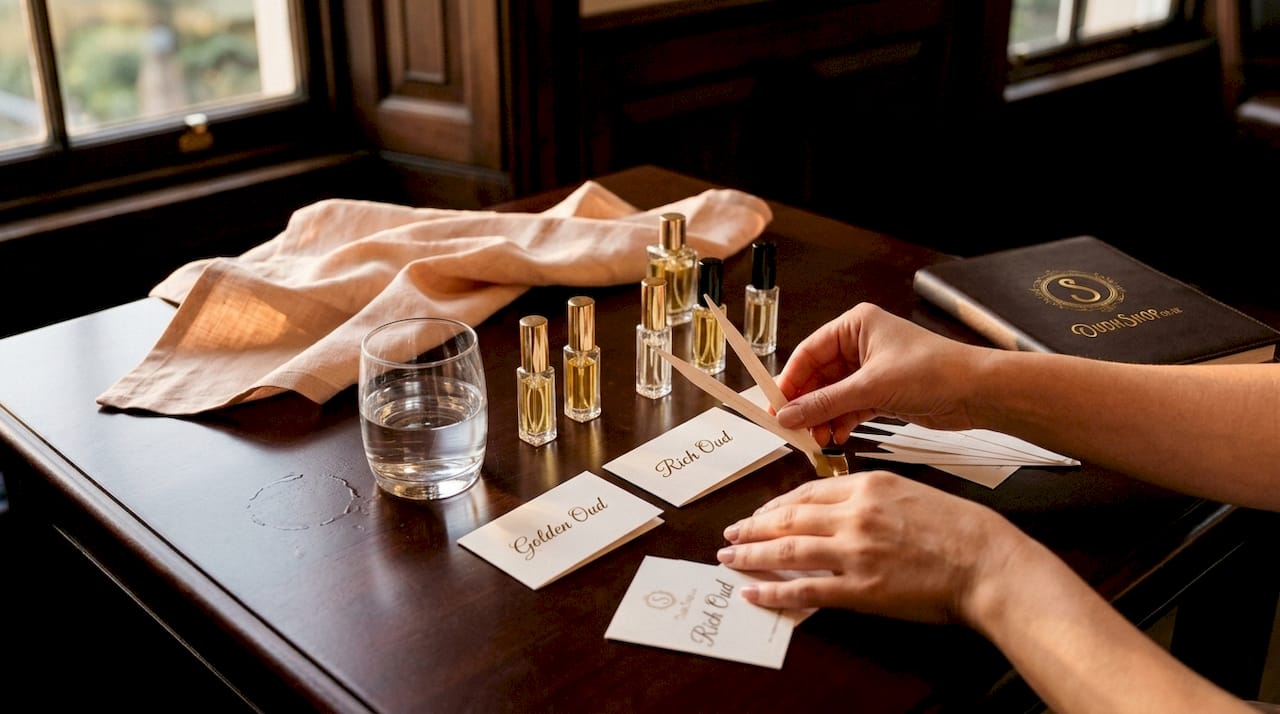
Pro Tip: Always note your occasion and context before comparing. A scent that feels overwhelming on a Tuesday morning at your desk may be utterly magnetic at a winter dinner. Define the wearing context upfront.
A step-by-step oud fragrance workflow
This is the part most buyers skip. They pick up a bottle, spray once, and decide. That is not comparison; that is instinct. A structured oud fragrance workflow looks like this:
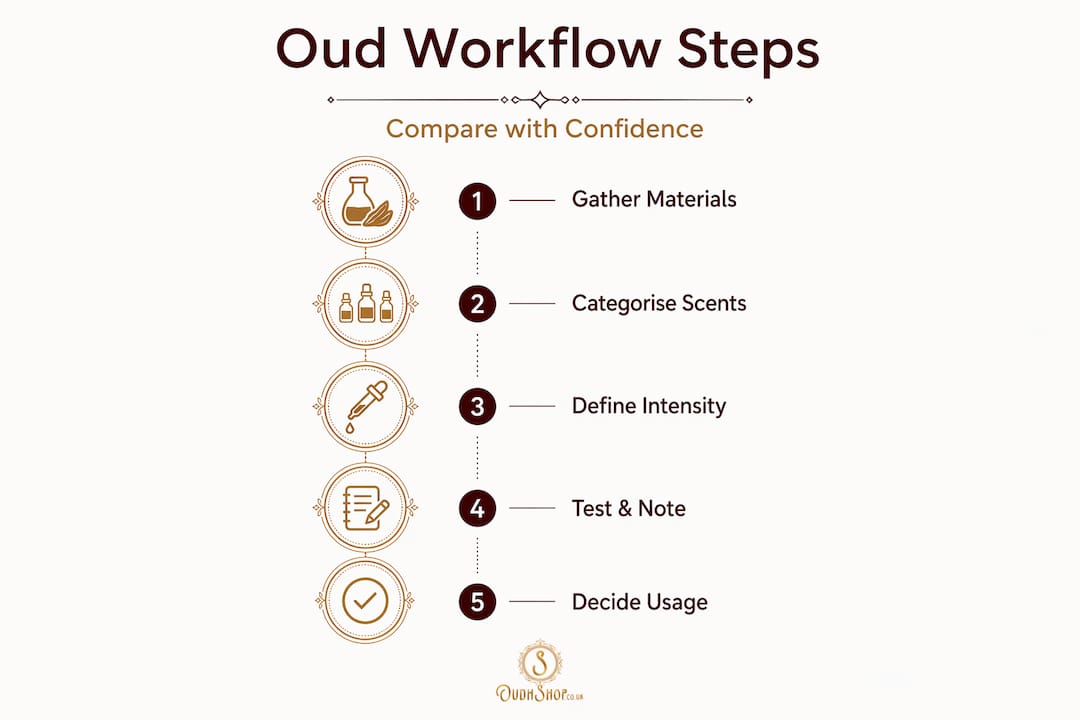
Categorise your shortlist. Before smelling anything, divide your candidates by scent family. Place white ouds, florals, and smoked profiles into separate groups. You will compare within families first, then across them.
Set the order by ascending intensity. Always begin with the lightest. Younger consumers increasingly gravitate toward lighter blends mixing citrus with oud, so these options also tend to be more accessible entry points for your nose. Starting light preserves your olfactory sensitivity for the denser profiles ahead.
Apply to blotter, then skin. Use a blotter for your initial impression, then apply the strongest contenders directly to your inner wrist. Skin chemistry is personal. A fragrance that smells flat on paper may open beautifully once it meets your body’s warmth.
Record first impressions immediately. The top notes, which form your initial impression, evaporate within five to fifteen minutes. Write down three words for each scent straight away. “Woody, medicinal, dark” tells you far more later than a vague memory of liking it.
Return after 30 minutes for the heart notes. This is where oud reveals its character. The scent profile evolves significantly during wear, and what seems sharp on first contact can become velvety and warm at the heart phase.
Assess the base notes and sillage after two hours. Sillage is the trail a fragrance leaves in the air. A well-crafted oud Extrait de Parfum should still be present on your skin hours later. Note how the character has shifted and whether you still find it wearable.
Evaluate social context suitability. Ask yourself honestly: would you wear this to a meeting, a dinner, or a celebration? Comparing oud scents is not just about preference in isolation but about appropriateness across different settings.
Try layering with a complementary note. Layering a lighter oud over a base musk, or applying a smoked oud atop a floral spray, can produce entirely new expressions. Layering oud with complementary fragrances creates a personalised signature that no single bottle can replicate alone.
Pro Tip: Limit active comparisons to four or five fragrances per session. After that, your nose begins to conflate the scents and your notes lose reliability. Rest, eat something neutral, and return to the remainder later.
Mistakes to avoid when comparing oud perfumes
Even seasoned fragrance enthusiasts make these errors. Spotting them early saves you from a collection of regretted purchases.
- Rushing the sensory experience. The most common mistake. Structured perfume discovery requires an unhurried approach, working through intensity tiers and scent families rather than immediately reaching for the boldest option.
- Judging on top notes alone. Oud’s magic lives in its base. Top notes burn off quickly, and a fragrance that smells harsh at first contact can become extraordinary within the hour.
- Ignoring longevity. A scent that fades after two hours is a different proposition to one that anchors itself to your skin for a full day. Longevity matters especially if you are purchasing for gifting.
- Over-saturating your nose. Olfactory fatigue is real. Beyond five or six samples without a break, every scent begins to blur into a generalised impression of “oud.” Coffee grounds or fresh air between samples resets your perception.
- Disregarding the recipient’s preferences for gifts. Curated intensity-tiered oud collections exist precisely because white oud and smoked oud speak to entirely different personalities. A gift chosen without thought to the receiver’s style is a missed opportunity.
- Skipping tester or travel formats. Buying full bottles during your first comparison session is premature. Testers exist to protect you from expensive mistakes.
“The best oud fragrance review you can give yourself is time. Allow the scent to tell its full story on your skin before you make any judgement.”
Making confident final choices
Once you have completed your comparison sessions and gathered your notes, the task shifts from sensing to deciding. Here is how to interpret your findings clearly.
| Decision factor | Personal use | Gifting |
|---|---|---|
| Intensity preference | Match to your daily context and occasion | Choose lighter profiles for unknown preferences |
| Scent family | Select what consistently draws you back in notes | White oud or floral oud for approachable, universal appeal |
| Longevity | Prioritise eight-plus-hour wear for full-day use | Consider moderate longevity for wearers new to oud |
| Seasonality | Smoky profiles for autumn and winter | Lighter, fresher blends for spring and summer gifting |
| Occasion suitability | Align with your predominant wearing context | Match to the recipient’s lifestyle and occasions |
Modern oud interpretations increasingly feature fresher compositions designed for international wearability, which means there are now excellent lighter options for those who have always found traditional oud too confrontational. This is genuinely good news for gift buyers. You no longer need to choose between authenticity and wearability.
When selecting for gifting, curated collections segmented by intensity are your most reliable resource. A set that includes a white oud, a floral, and a moderate wood-and-resin blend covers a broad range of preferences elegantly and lets the recipient discover their own preference within the gift itself. For exquisite gifting inspiration that complements a carefully chosen oud, the team at OnlyRoses offer beautifully conceived luxury gift frameworks worth considering alongside your fragrance selection.
Pro Tip: If two fragrances feel equally appealing, choose based on where you will wear them most. The best oud scent is not the most beautiful in the bottle. It is the one you will confidently reach for again and again.
To explore authentic oud fragrances and access guided discovery resources, Oudhshop’s beginner’s guide to oud is a thoughtful starting point for those still building their oud vocabulary.
My perspective on what actually matters
I have spent a great deal of time with oud, sampling everything from raw Agarwood oils to modern Extrait de Parfum blends designed for Western wardrobes. And my most honest observation is this: most people waste the entire comparison process chasing the strongest or the most praised option rather than the most appropriate one.
Oud, described often as liquid gold, carries that reputation because it rewards patience and context. I have watched buyers dismiss a beautiful white oud because it seemed “too simple,” then leave with a smoked attar they wore precisely once. The workflow matters not because it is academic, but because oud’s complexity demands it. Experience-led oud evaluation goes beyond mechanical grading; it reflects an intuitive reading of scent quality that develops only through unhurried exploration.
What I find genuinely exciting about today’s oud market is the breadth. Gifting oud is no longer an intimidating prospect, and wearing it no longer requires an encyclopaedic knowledge of Middle Eastern perfumery traditions. The modern approach is permission-giving. You can start with a citrus-oud blend for the office and arrive at a ceremonial smoked attar years later, or the other way around entirely.
Trust your notes. Trust the process. And resist the pressure to arrive at a conclusion before the fragrance has finished speaking.
— Oudh
Discover oud at Oudhshop
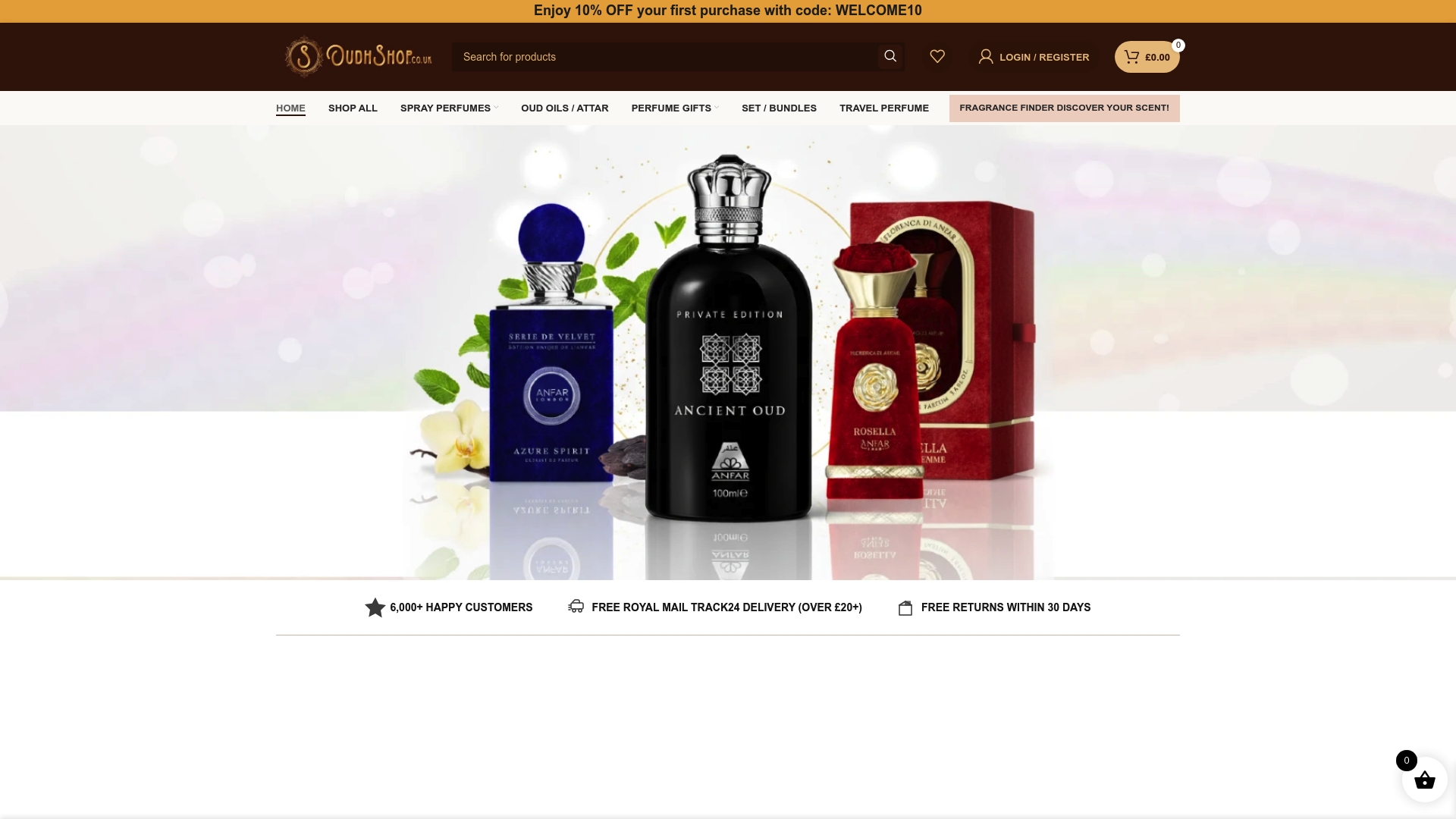
Oudhshop makes the practical side of comparing oud fragrances genuinely accessible. The perfume tester collection lets you experience multiple scent profiles before committing to a full bottle, giving you the hands-on comparison experience that any good workflow requires. For those purchasing as gifts, the oud gift sets are curated by intensity and occasion, taking the guesswork out of selection entirely. If you prefer a guided approach, Oudhshop’s perfume finder tool helps you match your preferences, lifestyle, and occasion to the right profile with precision. Every product is authentic, long-lasting, and crafted with the same heritage that has made Middle Eastern perfumery one of the world’s most respected fragrance traditions. Browse the full oud collection and start your comparison with confidence.
FAQ
What is an oud scent comparison workflow?
An oud scent comparison workflow is a structured method for evaluating multiple oud fragrances by scent family, intensity, and skin evolution before making a purchase decision. It helps both personal buyers and gift shoppers choose with clarity rather than impulse.
How many oud scents should I compare in one session?
Limit active comparisons to four or five fragrances per session to avoid olfactory fatigue. Taking breaks between samples and cleansing your palate with coffee grounds helps maintain accurate scent perception.
What is the difference between white oud and smoked oud?
White oud is clean, powdery, and approachable, making it suitable for everyday wear and gifting to oud newcomers. Smoked oud is richer, more resinous, and commanding, best suited to evening occasions and experienced oud wearers.
How long does oud fragrance last on skin?
Quality oud fragrances can last between 8 and 12 hours, with the scent profile evolving from sharp top notes through to warm, woody base notes over several hours.
How do I choose oud as a gift?
Choose from intensity-tiered oud collections and default to lighter or floral profiles when you are unsure of the recipient’s preferences. A curated discovery set covering multiple intensity levels gives the recipient the freedom to explore their own preference.