Luxury Arabian Oud Perfume Blog: Your Guide to Exquisite Fragrances
How oud is made: The art and science behind liquid gold
TL;DR:
- Genuine oud, or agarwood, is a rare, complex resin formed inside injured Aquilaria trees over decades through biological stress. Controlled induction methods now produce more consistent oud supply, but wild resin shaped by natural environmental factors remains more deeply complex and highly valued. The method of distillation, aging, and regional terroir all influence oud’s character, with patience and mastery essential to producing the most authentic and expressive oils.
Oud is often spoken of as though it were simply a particularly potent fragrance oil, something poured into a bottle and labelled exotic. The truth is far more extraordinary. Genuine oud, known botanically as agarwood, is a biological marvel forged inside living trees over years, sometimes decades, through a process of stress, infection, and transformation. Understanding how oud is actually made changes the way you experience it entirely. It shifts oud from a scent you wear to a story you carry, one written in resin, patience, and the masterful hands of artisan distillers.
Table of Contents
- What oud really is: Resin, heartwood, and rarity
- Resin induction: From natural wounds to modern techniques
- Distilling oud oil: Steam versus hydro-distillation
- What shapes oud character: Ageing, terroir, and artisan skill
- Why oud is more than a scent: Lessons for the discerning collector
- Experience authentic oud: Step into the world of Arabian fragrances
- Frequently asked questions
Key Takeaways
| Point | Details |
|---|---|
| Oud is biological resin | Authentic oud forms inside trees as a response to injury and microbial action, not simply by adding fragrance. |
| Controlled production accelerates resin | Modern growers use induction techniques to reliably produce oud resin, making it more accessible yet sparking debates on quality. |
| Distillation technique shapes aroma | Whether using hydro-distillation or steam methods, the process directly affects the oil’s complexity and yield. |
| Quality outweighs quantity | True enthusiasts value character and depth of oud oil over the total amount produced. |
| Collectors seek artistry and tradition | Oud’s mystique lies in its biological origin, cultural significance, and the skill involved in its extraction. |
What oud really is: Resin, heartwood, and rarity
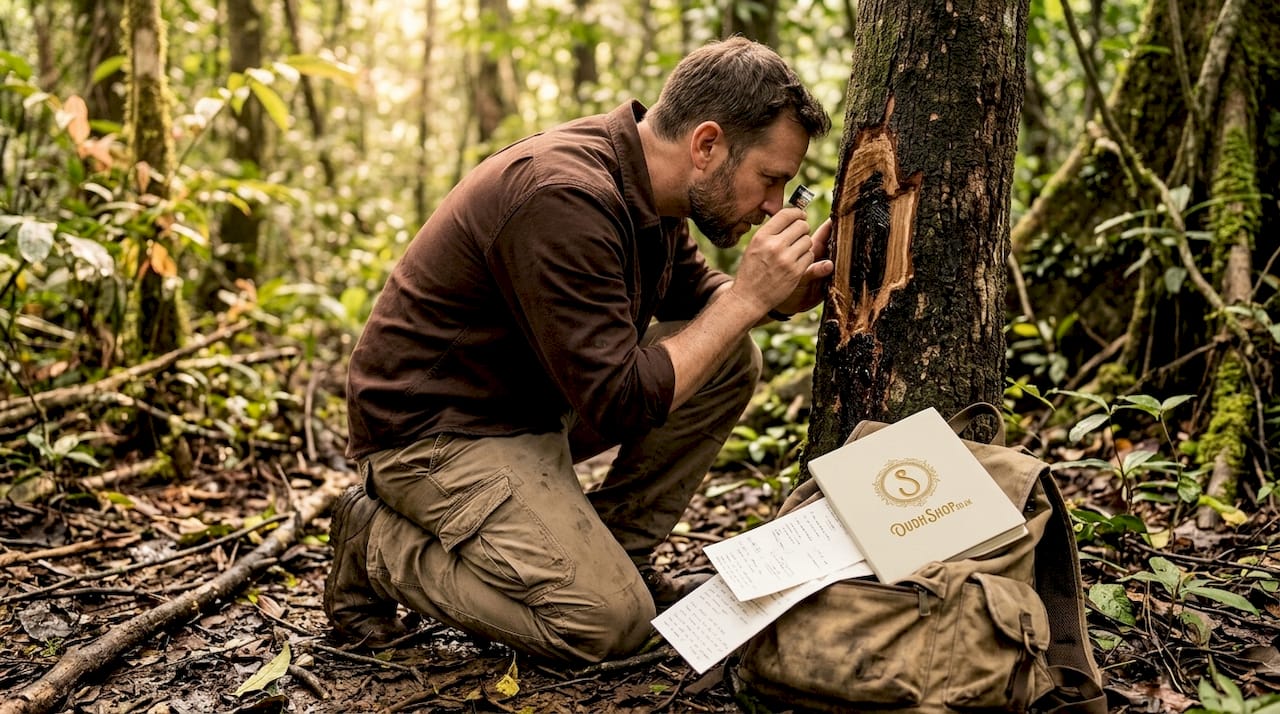
Most people assume oud is harvested like a crop. In reality, oud forms as a resinous heartwood inside Aquilaria trees only when the tree experiences injury, stress, or microbial invasion. Healthy Aquilaria wood is pale, almost unremarkable. The dark, dense, intensely fragrant material we call agarwood appears only when the tree mounts a biological defence response, saturating its own tissue with resin to wall off the threat.
This is not a process you can rush or reliably replicate on demand. Microorganisms, particularly certain moulds and fungi, play a central role: they penetrate the heartwood and trigger the tree’s resin-producing mechanism. The longer and more intensely this process continues, the darker and more saturated the wood becomes, and the richer its aromatic compounds grow. A freshly infected tree may show only faint traces of resin. A tree that has been slowly producing resin for thirty years or more can yield wood so dense it sinks in water, a hallmark of the finest grades.
Key facts that explain oud’s extraordinary rarity and value:
- Only a small percentage of wild Aquilaria trees naturally develop agarwood
- The resin-producing response varies enormously between individual trees and species
- Mature, heavily resinous wood can take decades to develop under natural conditions
- Overharvesting has placed several Aquilaria species on CITES protected lists, restricting trade
- The resulting scarcity pushes genuine oud oil to prices that rival, and often exceed, precious metals
“Oud is not a perfumer’s invention. It is the tree’s own language of survival, translated into one of the world’s most coveted scents.”
Understanding the oud aroma begins here, at the biological level, because every nuance you detect in a fine oud fragrance is a direct reflection of the tree’s history, its stresses, its environment, and the microorganisms that shaped it from within.
Resin induction: From natural wounds to modern techniques
Historically, oud producers waited. They searched ancient forests for naturally infected trees, a process that was unpredictable, labour-intensive, and increasingly unsustainable as global demand for oud grew. Today, the industry has largely shifted towards controlled induction methods, though the debate over their merits remains passionate among collectors and purists.
Modern agarwood production typically involves drilling holes into the trunk of a cultivated Aquilaria tree and introducing either fungal cultures or chemical elicitors directly into the wood. This mimics the natural infection process but compresses the timeline from decades to a matter of years. The result is more predictable resin formation and a far more reliable supply chain, which is precisely why most commercially available oud today originates from plantation trees rather than wild forests.
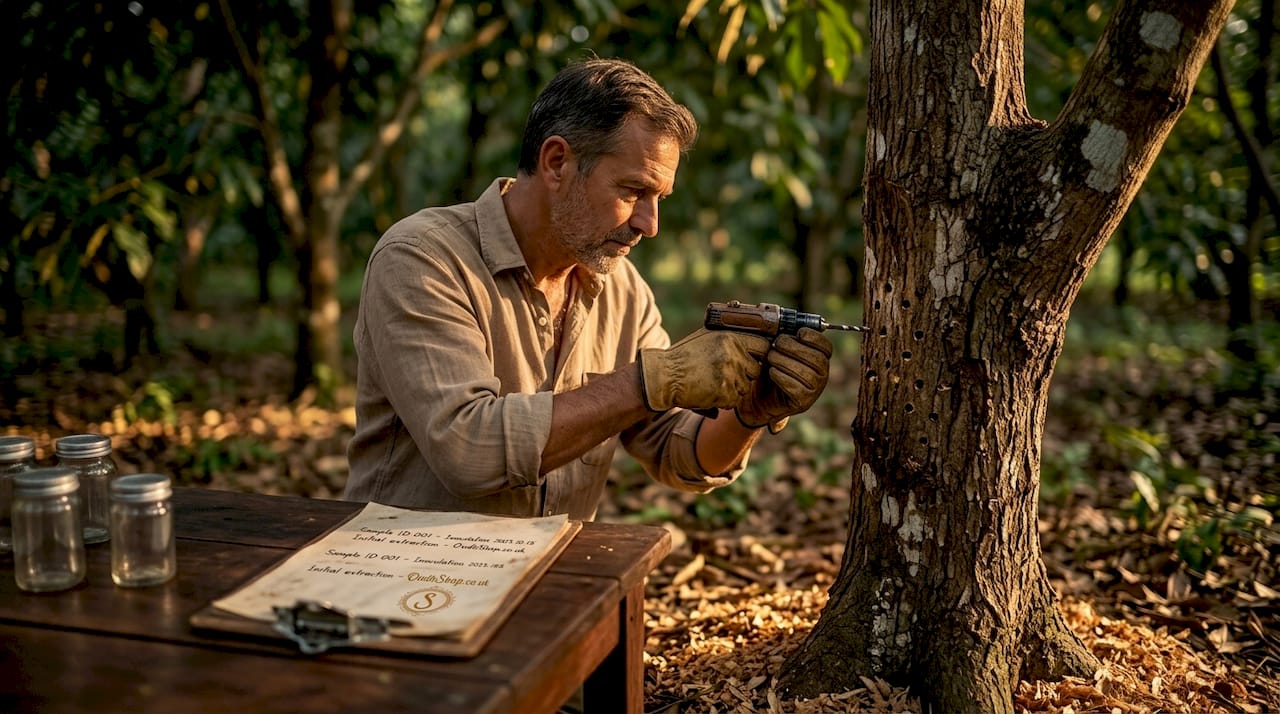
| Method | Timeline | Consistency | Scent character | Environmental impact |
|---|---|---|---|---|
| Natural infection | Decades | Unpredictable | Deeply complex | Low (if wild) |
| Fungal induction | 3 to 7 years | Moderate | Rich, variable | Low to moderate |
| Chemical elicitors | 1 to 3 years | High | Can lack depth | Moderate |
| Combined methods | 2 to 5 years | High | Increasingly refined | Moderate |
The controversy around controlled induction is genuine and worth understanding. Purists argue that wild resin, shaped by unpredictable environmental pressures over long periods, develops aromatic compounds that simply cannot be replicated in a plantation setting. Proponents of modern methods counter that controlled induction, when done with care and quality fungal strains, can produce resin of impressive complexity, and that it relieves pressure on endangered wild populations.
Pro Tip: When evaluating an oud oil or attar, ask the supplier whether the agarwood was wild-harvested, plantation-grown with fungal induction, or produced using chemical elicitors. This single question tells you a great deal about the likely character and price point of the oil. Explore the unique oud ingredients that distinguish genuine artisanal ouds from mass-produced alternatives.
The honest answer is that both methods have their place. Wild oud is extraordinary but finite and increasingly rare. Well-managed plantation oud, particularly from regions with long traditions of agarwood cultivation such as Cambodia, India, and Vietnam, can be genuinely beautiful. What matters most is transparency from the producer.
Distilling oud oil: Steam versus hydro-distillation
Once the resinous wood has been harvested and graded, the next transformation begins: extraction of the aromatic oil. This is where the science of distillation meets the artistry of the master distiller, and where choices made over hours and days shape the character of the final oil for years to come.
Two principal methods dominate oud oil extraction, and each produces a meaningfully different result.
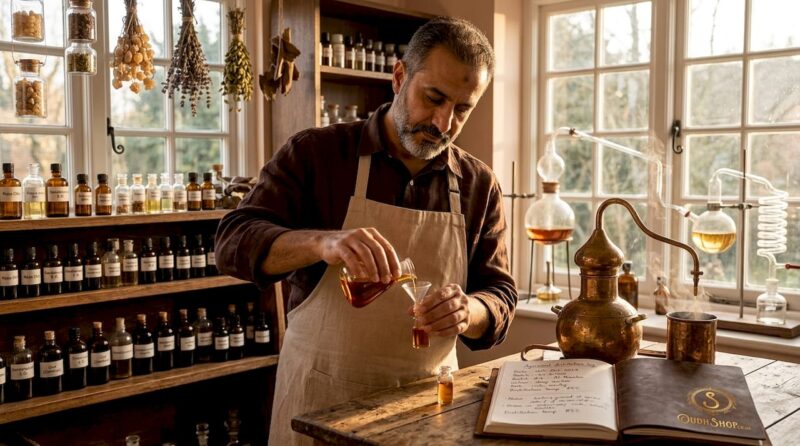
Hydro-distillation involves submerging chipped or powdered agarwood directly in water inside a still, then heating the mixture gently until aromatic compounds rise with the steam and are captured. The lower, more even heat and extended contact time allow a broader spectrum of aromatic molecules to be drawn out. The resulting oil tends to be richer, more complex, and more closely aligned with the raw wood’s character. This is the traditional method favoured across the Arabian Peninsula and South Asia for centuries.
Steam distillation passes pressurised steam through the wood material without direct water contact. It is faster, yields more oil per kilogram of wood, and is easier to scale. However, the higher heat can degrade or simply fail to capture some of the more delicate aromatic compounds that give a fine oud its layered, evolving character.
The trade-offs between distillation methods are well documented among serious collectors: heat contact, duration, yield, and perceived scent character all shift depending on which approach the distiller chooses.
| Factor | Hydro-distillation | Steam distillation |
|---|---|---|
| Heat level | Lower, more gentle | Higher, more direct |
| Duration | Longer (days) | Shorter (hours) |
| Yield per kg | Lower | Higher |
| Scent complexity | Greater, more nuanced | Can be sharper, less subtle |
| Traditional use | Arabian Peninsula, South Asia | Wider commercial use |
| Cost of production | Higher | Lower |
For the fragrance enthusiast seeking an affordable entry into oud, steam-distilled oils offer genuine quality at more accessible prices. For those who seek the deepest expression of authentic Arabic oud, hydro-distilled oils from carefully aged wood represent the pinnacle of the craft.
The distillation vessel itself matters too. Copper stills, long preferred by traditional distillers, interact subtly with the aromatic compounds during distillation, contributing to the oil’s final character in ways that stainless steel cannot replicate. These are the kinds of details that separate a merely good oud oil from a truly memorable one.
What shapes oud character: Ageing, terroir, and artisan skill
Even with the finest wood and the most careful distillation, the story of an oud oil is not complete. Three additional forces shape its ultimate character: ageing, terroir, and the irreplaceable judgement of an experienced distiller.
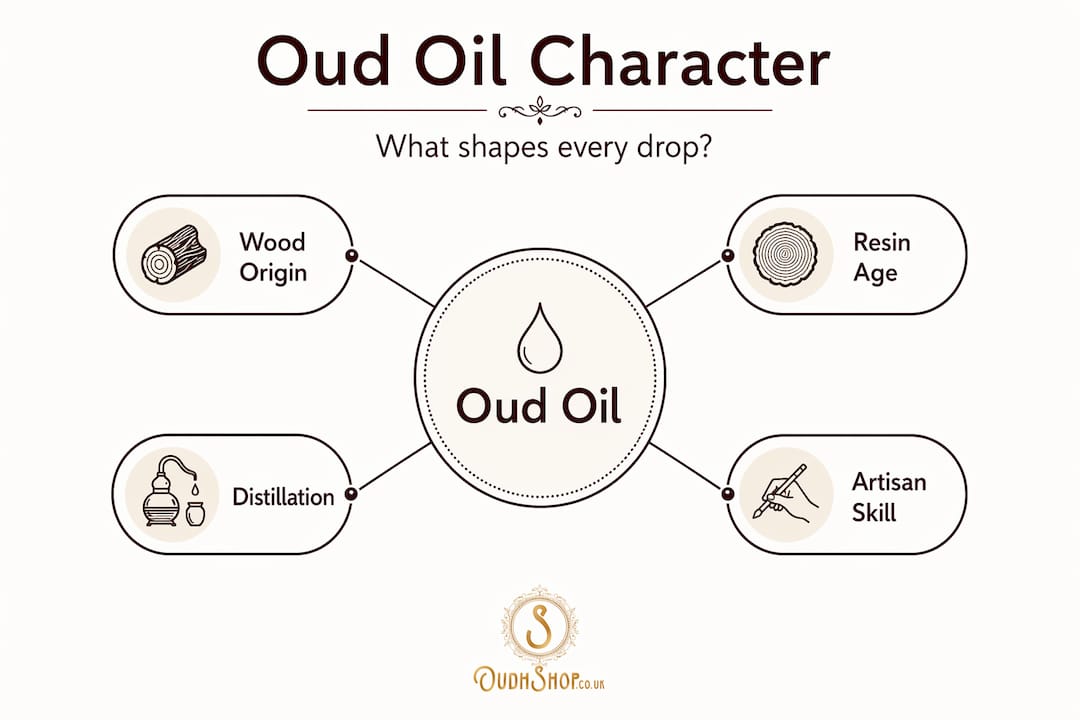
Ageing transforms oud oil in ways that parallel the maturation of fine wine or aged spirits. Freshly distilled oud can be sharp, almost medicinal, with its aromatic complexity locked beneath a surface volatility. Aged over months or years in sealed vessels, the oil mellows and deepens. Harsh top notes soften. Base notes of leather, earth, and dark wood emerge with greater clarity. Some of the most revered oud oils in the world have been aged for a decade or more before reaching a collector’s hands.
Terroir is a concept borrowed from wine but entirely applicable to oud. The region where Aquilaria trees grow profoundly influences the aromatic character of the resin they produce:
- Indian oud (Hindi oud) is celebrated for its barnyard, leathery, and intensely animalic character, rich and polarising in equal measure
- Cambodian oud tends towards sweet, honeyed, and fruity notes with a smooth, approachable warmth
- Vietnamese oud is often described as sweet and medicinal, with a distinctive green and floral quality
- Indonesian oud varies widely by island, from the cool, resinous character of Borneo oud to the earthier profiles of Sumatra
Soil composition, rainfall patterns, altitude, and even the specific species of Aquilaria growing in a region all contribute to these regional signatures. The quality of oud oil is therefore heavily dependent on how the resin was induced and aged long before distillation ever begins.
Pro Tip: If you are building a collection, consider acquiring single-origin oud oils from at least two or three distinct regions. Comparing a Hindi oud with a Cambodian oud side by side is one of the most illuminating exercises in fragrance education available to any enthusiast.
The artisan distiller’s role is perhaps the most underappreciated factor of all. Decisions about when to begin distillation, how long to run the still, which fractions of the distillate to keep or discard, and how to blend different runs are all made by experienced human judgement. As yield alone does not determine quality, a distiller who chases volume will inevitably compromise character. The masters of this craft, many of whom have inherited their knowledge across generations, understand that restraint and patience are as important as technique.
Explore luxurious oud selections curated with these principles in mind, and learn the eight steps to selecting authentic oud to ensure every purchase reflects genuine craftsmanship.
Why oud is more than a scent: Lessons for the discerning collector
Here is the perspective we hold at Oudh Shop, one shaped by years of working closely with oud oils, attars, and the broader tradition of Middle Eastern perfumery: the Western fragrance market has largely taught people to value novelty and volume. Oud teaches the opposite lesson entirely.
When you understand that a single kilogram of premium oud oil may require hundreds of kilograms of carefully selected, resin-saturated wood, years of patient ageing, and the refined skill of a master distiller, you begin to see fragrance differently. Complexity earned through time and biological mystery is not something that can be shortcut. The most extraordinary oud oils we have encountered are not the ones that shouted loudest on first application. They are the ones that revealed new facets over hours of wear, that changed subtly with body heat, that lingered in memory long after the skin had been washed clean.
This is the uncomfortable truth that the fragrance industry rarely states plainly: more yield does not mean better oud. Faster production does not mean richer character. The collector who chases the highest-grade oil is not simply buying luxury. They are buying time, biology, geography, and irreplaceable human expertise, all compressed into a few precious millilitres of liquid gold.
For British enthusiasts approaching oud for the first time, we would encourage you to resist the impulse to judge quickly. Wear an oud oil for a full day before forming an opinion. Notice how it evolves from the sharp, resinous opening to the deep, smoky, animalic warmth of the dry-down. That evolution is the story of the tree, the infection, the distillation, and the ageing, all unfolding on your skin in real time.
Experience authentic oud: Step into the world of Arabian fragrances
If this exploration of oud’s origins has stirred your curiosity, the natural next step is to experience genuine oud for yourself.
At Oudh Shop, we curate an exceptional range of authentic oud perfumes, attars, and discovery collections, each selected for its provenance, quality, and aromatic integrity. Whether you are ready to explore our full oud collection or searching for the perfect perfume gift for someone who appreciates the finer things, we bring the heritage of Arabian perfumery directly to your door. For those seeking an introduction to the very finest expressions of this ancient art, our premium oud collection offers a masterfully curated starting point. Every bottle tells a story worth wearing.
Frequently asked questions
What makes genuine oud so expensive?
Authentic oud is expensive because its resin forms slowly inside rare Aquilaria trees only under stress or infection, and the extraction yields are remarkably low, making true oud oil one of the scarcest aromatic materials on earth.
Can controlled methods produce the same quality as wild oud?
Controlled induction can produce excellent resin, but many collectors believe wild resin, shaped by decades of unpredictable environmental stress, offers a depth and complexity that plantation methods have yet to fully replicate.
What is the difference between hydro-distillation and steam distillation for oud?
Hydro-distillation uses lower heat and longer processing times, often resulting in richer, more nuanced scent, while steam distillation can yield more oil per kilogram of wood but may sacrifice some of the oil’s subtlety and aromatic complexity.
Why is yield not the main indicator of oud quality?
Because yield can be increased through faster, higher-heat methods that compromise the oil’s complexity, true oud quality is measured by aromatic depth, character, and longevity rather than volume produced.