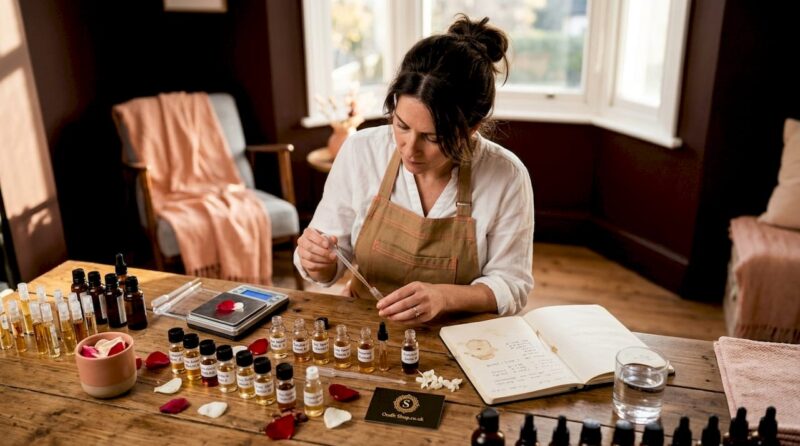
Luxury Arabian Oud Perfume Blog: Your Guide to Exquisite Fragrances
Unlock the secrets of perfume notes for your scent
TL;DR:
- Perfume notes are the scent impressions at different stages of wear, organized into top, heart, and base layers.
- The fragrance pyramid visually explains how notes develop from initial application to long-lasting scent.
- Trust your nose and emotional response over theories and note lists when choosing fragrances.
You pick up two perfumes at a department store counter, both described as “rose.” One smells powdery and romantic; the other is sharp, green, and almost medicinal. How can the same flower produce such wildly different results? The answer lies entirely in understanding perfume notes, the invisible architecture that shapes every fragrance from the first spritz to the final whisper on your skin. Once you grasp how notes work together, choosing a scent stops being a frustrating guessing game and becomes an informed, genuinely pleasurable act of self-expression.
Table of Contents
- What are perfume notes?
- The fragrance pyramid: How notes unfold
- Modern evolutions: Beyond the classic pyramid
- Using perfume notes to find your ideal scent
- Why trusting your nose matters more than the pyramid
- Explore and experiment with Oudh Shop
- Frequently asked questions
Key Takeaways
| Point | Details |
|---|---|
| Perfume notes explained | Understanding top, heart, and base notes reveals how scents unfold and why perfumes change over time. |
| Classic versus modern models | Both pyramid and linear scent structures exist; knowing the difference helps in selecting and enjoying fragrances. |
| Practical note selection | Assess a perfume’s notes before buying to match your taste, occasion, and lasting preferences. |
| Trust your experience | Personal testing remains the best way to find your true signature scent beyond technical note breakdowns. |
What are perfume notes?
Perfume notes are the distinct scent impressions that a fragrance releases at different stages of its life on your skin. Think of them less like individual ingredients and more like chapters in a story, each one arriving, developing, and eventually yielding to the next. A note is not simply a listed ingredient; it is the olfactive (relating to the sense of smell) experience that ingredient creates when combined with everything else in the bottle.
Understanding perfume notes explained means recognising three distinct layers:
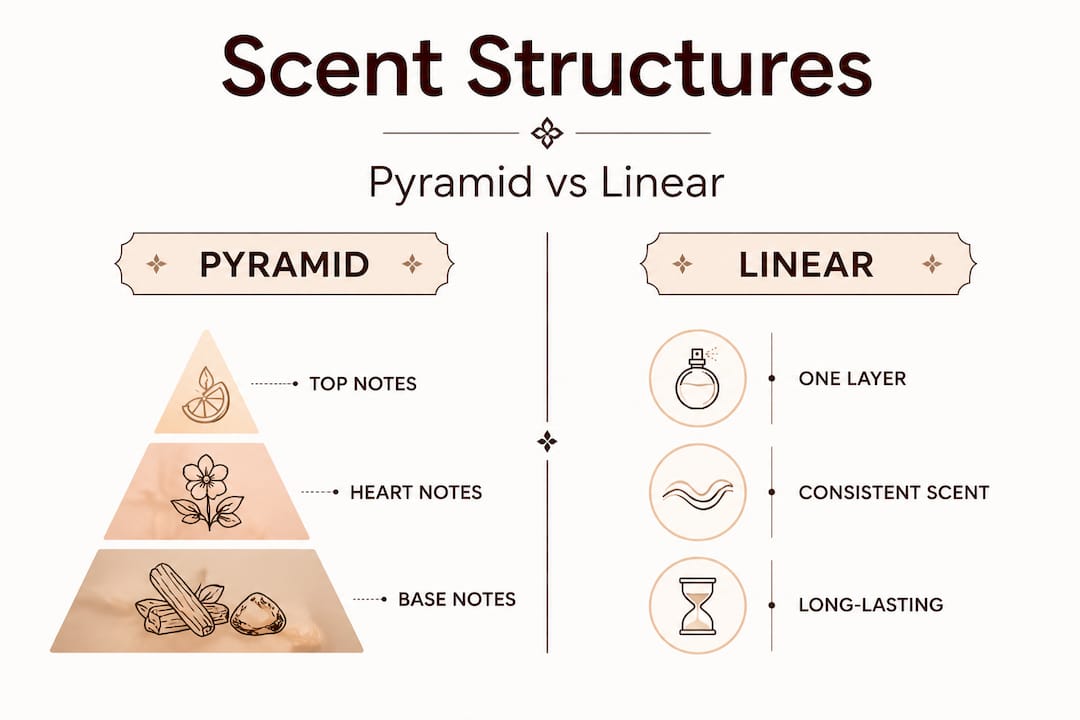
- Top notes: The opening act. These are the lightest, most volatile molecules that reach your nose first, usually within thirty seconds of application. Common examples include bergamot, lemon, grapefruit, and light herbs like basil. They are vivid and immediate but fade quickly, often within fifteen to twenty minutes.
- Heart notes (middle notes): The true soul of the fragrance. Once the top notes dissipate, the heart reveals itself, forming the dominant character of the perfume for the next one to four hours. Rose, jasmine, ylang ylang, geranium, and spices like cardamom and clove are classic heart note materials.
- Base notes: The foundation and lasting memory of a scent. Rich, heavy molecules like oud (Agarwood), sandalwood, vetiver, musk, ambergris, and vanilla anchor the fragrance, often lingering on skin and fabric for six hours or considerably longer. Base notes are why an Extrait de Parfum worn on a Tuesday morning can still whisper on a cashmere sleeve by Wednesday afternoon.
Notes perform a storytelling function within perfumery. A skilled perfumer uses the top notes to attract attention, the heart notes to define personality, and the base notes to leave a lasting emotional impression, almost like the beginning, middle, and ending of a novel. This is precisely why two rose perfumes smell so different: one might pair a fresh rose heart with a green, dewy top note and a light musk base, while another roots that same rose in a smoky oud base with a spiced, resinous heart. Same protagonist; entirely different narrative.
The fragrance pyramid originated with perfumer Jean Carles in the twentieth century as a systematic way to categorise notes by their rate of evaporation, providing perfumers with a shared professional language for the first time.
This historical framework gave the industry an elegant map to follow, and it remains an essential reference point for anyone serious about fragrance.
The fragrance pyramid: How notes unfold
Having defined the types of notes, we can explore how they interact over time. The fragrance pyramid is a visual model that represents the journey from the lightest top notes at the apex to the heaviest base notes at the foundation. The fragrance pyramid originated as a tool to help perfumers organise ingredients by evaporation rate, but it is equally useful for enthusiasts who want to understand what they are experiencing at each stage of wear.
| Layer | Timing on skin | Common examples | Effect on the wearer |
|---|---|---|---|
| Top notes | 0 to 20 minutes | Citrus, light herbs, aldehydes | Immediate impression; bright and energising |
| Heart notes | 20 minutes to 4 hours | Florals, spices, green accords | Defines personality; warm and expressive |
| Base notes | 2 hours onwards | Oud, woods, musk, resins, vanilla | Depth and longevity; sensual and memorable |
How to read a fragrance pyramid when shopping
- Start at the top. When you see a perfume listed with top notes of bergamot and pepper, expect those to be your very first impression on a tester strip, exciting but fleeting.
- Focus on the heart. This is what you will smell for most of the day. If the heart notes appeal to you, the perfume is worth testing on skin.
- Consider the base before you buy. The base note is what remains when you return home after a long day. If oud, sandalwood, or vanilla grounds a fragrance, it will likely feel heavier and more intimate by evening.
- Give it time on your skin. Never make a final decision at the counter. Apply the perfume to your wrist and revisit it after thirty minutes when the heart note has fully opened.
- Cross-reference with the concentration. An Eau de Toilette will show its perfume types guide differently to an Extrait de Parfum, with the latter revealing its base notes far more prominently.
Pro Tip: The skin chemistry you have, influenced by your natural oils, diet, and even body temperature, affects how each note develops. A warm, naturally oily skin type will amplify base notes significantly, making oud and musky accords smell richer and last noticeably longer than on drier skin. Always test on your own skin, not just a blotter strip.
Understanding pyramid structure also opens the door to the art of scent layering, where you can apply a heavy base note fragrance first, then layer a lighter, citrus-forward scent on top to create a personalised accord that evolves beautifully throughout the day.
Modern evolutions: Beyond the classic pyramid
The traditional fragrance pyramid is a masterful framework, but contemporary perfumery is challenging its assumptions in fascinating ways. With scent evolution in mind, let us consider how the fragrance world is innovating far beyond what Jean Carles originally envisioned.
Modern perfumers increasingly create what are known as linear scents: fragrances that smell essentially the same from the first spray to the final dry down. There is no dramatic top-to-base journey; the scent remains stable and consistent. Many popular designer and celebrity fragrances are intentionally linear, giving the wearer a reliable, predictable experience throughout the day.
| Feature | Pyramid structure | Linear structure |
|---|---|---|
| Scent evolution | Changes from top to base over time | Remains consistent throughout wear |
| Complexity | High; multi-layered storytelling | Lower; single dominant impression |
| Best for | Fragrance enthusiasts who love discovery | Those who want signature predictability |
| Typical ingredients | Naturals, resins, complex accords | Synthetics, single-note accords |
| Longevity behaviour | Evolves and deepens | Steady performance |
Contrasting views show that while synthetic molecules enable these stable, linear performances, natural ingredients behave in more unpredictable ways on the skin, reacting to body heat, moisture, and time in ways that synthetic counterparts simply cannot replicate. This is precisely why a natural rose absolute in a Extrait de Parfum smells subtly different on ten different people, while a synthetic rose molecule in a mass-market Eau de Toilette remains consistent regardless of who wears it.
This unpredictability of naturals is not a weakness; it is one of the most exquisite qualities of fine fragrance. It means your perfume becomes genuinely yours, shaped by your body chemistry into something no one else can quite replicate.

Advanced synthetics such as Iso E Super (a woody, cedarwood-like molecule) and Ambroxan (derived from ambergris) have also created a new category sometimes called “skin scents,” fragrances that meld so seamlessly with body chemistry that they seem to emerge from within rather than sit on top of the skin. These ingredients blur the pyramid entirely, creating an intimate, almost invisible sillage (the scent trail a fragrance leaves in the air) that many wearers find deeply appealing.
Pro Tip: When exploring a new fragrance, test both a classic pyramid scent and a modern linear scent on separate wrists in the same session. The contrast will immediately reveal which style resonates with your sensibility and lifestyle. You can refine your scent layering tips approach once you identify which structure you naturally gravitate towards.
Using perfume notes to find your ideal scent
Now that you know the theory, here is how to use it practically when finding your next perfume. The knowledge of notes is only as valuable as its application, and the most discerning fragrance enthusiasts use it not as a rigid checklist but as an intuitive guide.
Before you begin shopping, ask yourself:
- What is the occasion? A fresh, citrus-forward fragrance with a light musk base suits daytime wear beautifully, while a deep oud or amber heart note feels more appropriate for an evening out.
- What season are you shopping for? Light, aquatic, and green notes feel naturally refreshing in summer. Rich woods, spiced hearts, and balsamic (warm, resinous) base notes are exquisitely suited to autumn and winter.
- How important is longevity? If you need a fragrance to last eight or more hours without reapplication, prioritise a high concentration of base notes and consider an Extrait de Parfum format.
- Do you prefer complexity or consistency? Decide whether you enjoy watching a fragrance evolve throughout the day or whether you prefer a reliable, signature-like presence.
- What emotions do you want the fragrance to evoke? Fragrance is memory and mood. A vibrant neroli top note can feel energising and optimistic, while a smoky oud base note creates a sense of depth, mystery, and confidence.
Steps for discovering your perfect notes
- Use a guided tool first. Our perfume finder tool asks a series of simple questions about your preferences and lifestyle, then points you towards fragrances whose note profiles genuinely match your sensibility.
- Sample before you commit. Order discovery sets or travel-size vials before investing in a full bottle. Wear each fragrance for an entire day to experience the full pyramid evolution.
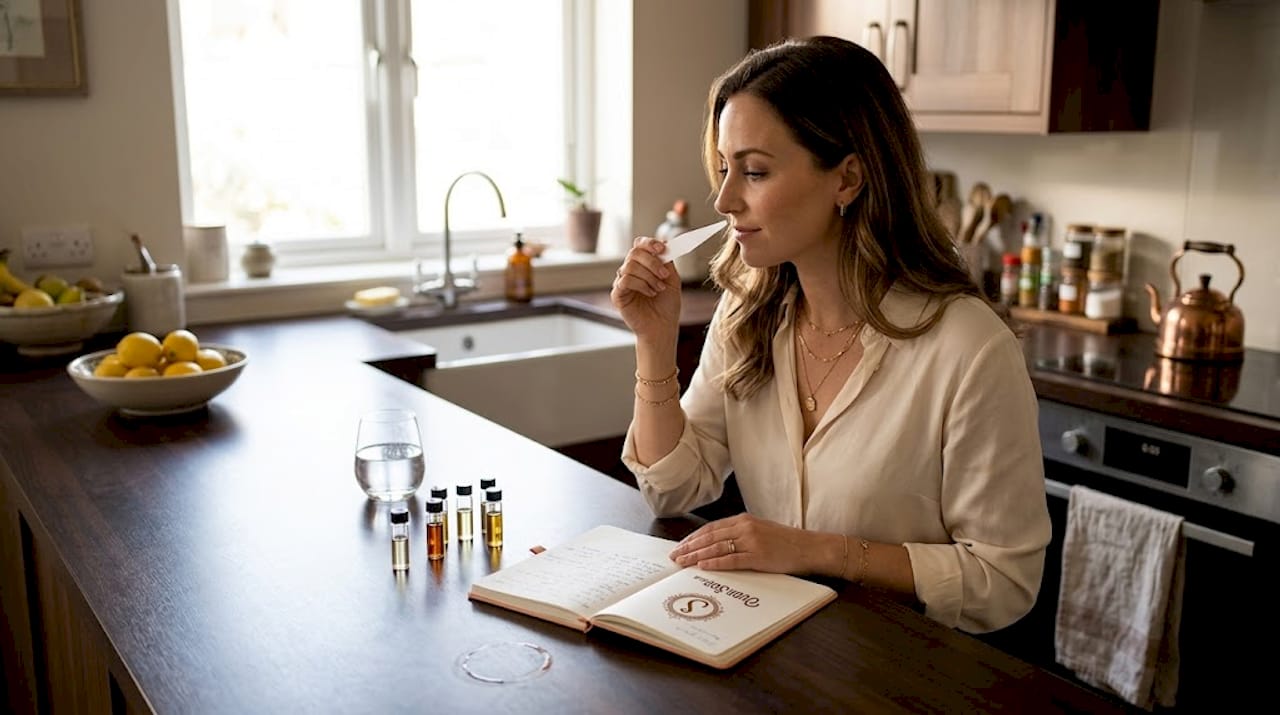
- Keep a scent journal. After each wear, note which stage you enjoyed most. Over time, patterns will reveal which note families you consistently love, whether it is the zesty brightness of citrus tops, the lush warmth of floral hearts, or the earthy, grounding depth of a resinous base.
- Explore the signature scent guide to understand how Arabian fragrance traditions have layered notes for centuries, offering a rich vocabulary of scent that extends well beyond Western perfumery conventions.
- Investigate specific note families. If you find yourself drawn to woody, earthy foundations, our oud notes guide is an exceptionally detailed resource for understanding the extraordinary range of Agarwood accords, from smoky and leathery to sweet and almost fruity.
The fragrance pyramid’s origins in professional perfumery are worth remembering here: this framework was created to give experts a shared language. As an enthusiast, you are essentially learning the same language, and once you speak it, the entire world of fragrance becomes navigable rather than overwhelming. Experimenting freely and without self-judgement is truly the most reliable path to discovery.
Why trusting your nose matters more than the pyramid
Here is a perspective that might challenge conventional wisdom: all of this theory, the pyramid, the note categories, the comparison of linear versus evolving structures, is valuable, but it can also become a cage if you let it.
We see it frequently. Someone reads a fragrance review describing a perfume as having a prominent vetiver base note, decides they “don’t like vetiver,” and dismisses the fragrance before ever trying it. They deny themselves something that might have become deeply personal and meaningful, simply because a category label triggered a preconception.
The pyramid and note lists are tools for navigation, not rules for decision-making. Your nose, and the emotional memories and associations it carries, is a far more reliable guide. A fragrance that reminds you of a beloved grandparent’s garden, or of a particular exhilarating evening, has a value no note list can capture. That is real olfactive intelligence.
We would encourage you to use note descriptions to narrow your search, but always let skin testing and emotional response make the final call. The oud vs amber advice we offer is a perfect example: on paper, oud and amber are both described as warm, rich, and resinous base notes. In practice, they create entirely different experiences that only direct testing can reveal.
As we say here at Oudh Shop: “Ultimately, the best fragrance is the one that brings you joy, even if it breaks every textbook rule.” Wear what moves you. Experiment without apology. The fragrance enthusiasts who discover the most extraordinary signature scents are those who trust their instincts above all else.
Explore and experiment with Oudh Shop
Ready to apply everything you have learned? At Oudh Shop, we have built our entire collection around the principle that fragrance discovery should be joyful, accessible, and richly rewarding.
Start your journey with our Perfume Finder, which guides you through personalised recommendations based on your preferred note families, occasions, and desired longevity. If you prefer to explore independently, our discovery sets and travel-size vials allow you to wear each fragrance through its full pyramid evolution before committing to a full bottle. From exquisite oud Extraits de Parfum to luminous floral heart note blends, every scent in our collection is selected for its exceptional depth and authenticity. Whether you are searching for your own signature or seeking a truly memorable gift, your next great fragrance is waiting.
Frequently asked questions
What are top, heart, and base notes in perfume?
Top notes are the first scents you perceive immediately after application, heart notes form the main character of a fragrance during wear, and base notes create the lasting depth that lingers on skin for hours. The fragrance pyramid structure organises these three layers by their evaporation rates.
Why does my perfume smell different after an hour?
As the volatile top notes evaporate, the warmer, richer heart and base notes emerge, revealing a different and often deeper facet of the fragrance. This evolution is entirely by design, with the pyramid’s evaporation model structuring how and when each layer appears.
Do all perfumes follow the traditional fragrance pyramid?
No. Many modern fragrances are intentionally linear, offering a consistent scent profile from first application to final dry down rather than evolving through distinct stages. Synthetics enable linear scents, while natural ingredients tend to behave in more nuanced, evolving ways on the skin.
How can I find which perfume notes suit me best?
The most effective method is to use a guided tool, sample widely across different note families, and wear each fragrance for a full day before deciding. Noting which notes to prioritise through a scent journal over several weeks reveals your genuine preferences far more accurately than any single shopping trip.