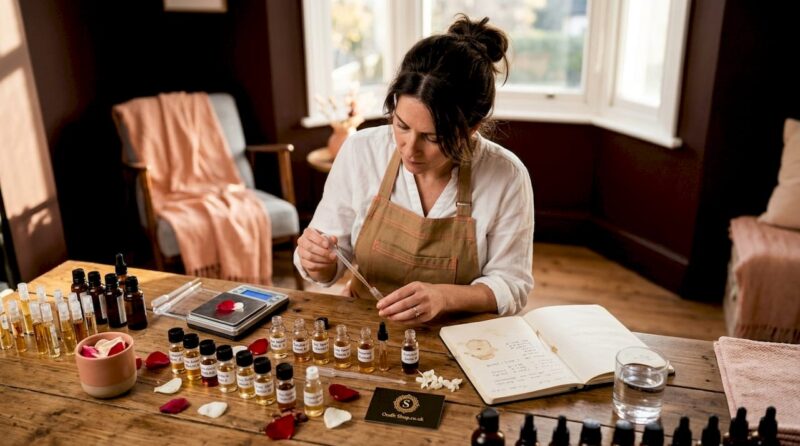
Luxury Arabian Oud Perfume Blog: Your Guide to Exquisite Fragrances
Discover why scent matters: Identity, culture, well-being
TL;DR:
- Scent directly influences emotions, memories, and self-perception by bypassing the rational brain.
- Signature fragrances create neural associations that boost confidence and reinforce personal identity.
- Cultural traditions like oud use scent as a ceremonial tool for connection and emotional well-being.
Scent is the most direct route into the human mind. Unlike every other sense, olfaction connects directly to the limbic system, bypassing the thalamus entirely to influence emotions, memories, and even our sense of self before we can think rationally about it. That means the perfume you choose each morning is doing far more than filling the air around you. It is quietly shaping your mood, reinforcing your identity, and signalling your values to the world. From the smoky, resinous warmth of oud to the velvety softness of musk, the fragrances you wear are among the most powerful personal statements you will ever make.
Table of Contents
- The science of scent: How olfaction shapes emotion and memory
- Why scent matters for personal identity and confidence
- Scent and cultural significance: Oud, musk, and Arabian perfume traditions
- Practical applications: Enhancing well-being and daily ritual with scent
- The uncomfortable truth about scent: Why we underestimate its power
- Explore oud and Arabian perfume essentials: Find your scent
- Frequently asked questions
Key Takeaways
| Point | Details |
|---|---|
| Direct impact on mood | Scent bypasses the rational brain to immediately influence emotions and well-being. |
| Identity and confidence boost | Signature scents like oud help shape personal identity and self-esteem. |
| Cultural significance | Luxurious Arabian perfumes reflect heritage and elevate personal expression in the UK. |
| Practical daily benefits | Strategic fragrance use can improve mood, heart rate, and everyday ritual. |
The science of scent: How olfaction shapes emotion and memory
Most of us understand that a particular fragrance can suddenly transport us back to a cherished memory. What is far less well understood is precisely why that happens, and what it means for the fragrances we choose to wear every day.
When you inhale a scent, odour molecules travel to the olfactory bulb, which sits at the very base of the brain. From there, signals travel directly into the limbic system, the ancient emotional core of the brain that governs memory, desire, fear, and pleasure. No other sense takes this shortcut. Vision, hearing, and touch all pass through the thalamus first, a kind of rational relay station, before reaching emotional centres. Scent skips that entirely, which is why a single note of agarwood or rose can produce an immediate and visceral emotional response, often before you have even consciously identified what you are smelling.
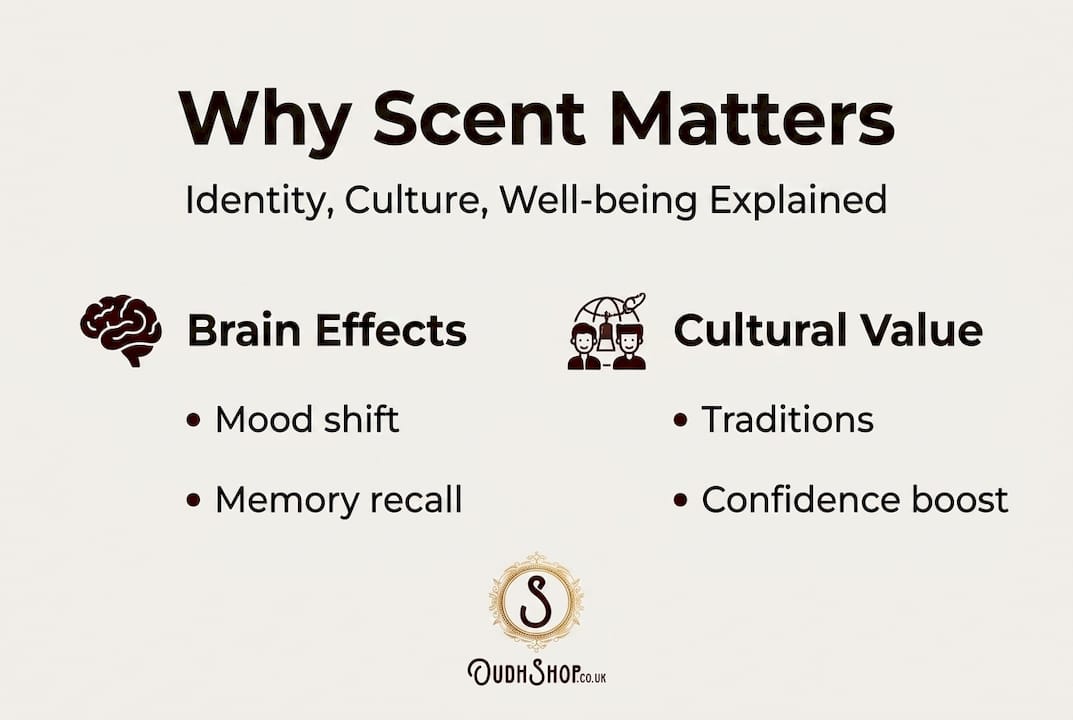
This is not merely poetic. Neuroscientific research confirms that scent alters nervous system responses in measurable ways. Pleasant scents slow the heart rate, shift the autonomic nervous system toward calm, and lift mood. Peppermint, for example, reduces theta brainwave power and increases beta activity, producing a state of heightened alertness and arousal. These are not subtle effects. They are detectable via EEG and physiological monitoring.
| Scent | Measured effect | Application |
|---|---|---|
| Lavender | Alters SAL/DMN brain connectivity for up to 2 hours | Evening relaxation, winding down |
| Peppermint | Reduces theta power, increases beta waves | Focus, morning energy |
| Orange | EEG valence shift from 2.61 to 3.68 | Uplifting mood, social occasions |
| Oud/Agarwood | Warm base notes ground and calm the nervous system | Grounding, ceremonial wear |
Beyond these better-known scents, signature fragrances boost personal confidence through a documented feedback loop between olfactory perception and self-image. When you wear a fragrance you associate with your best self, your brain reinforces those associations repeatedly over time, effectively training your emotional state.
What this means for fragrance lovers is significant. Your perfume is not decoration. It is a neurological tool. The notes you choose, the concentration level (whether Eau de Parfum or Extrait de Parfum), even the timing of application, all contribute to emotional outcomes you can actively design.
Pro Tip: To use scent strategically, select a grounding oud base for high-pressure days and a brighter citrus or peppermint-forward blend for mornings when you need energy and clarity. Explore scent layering tips to combine notes effectively.
The key insight from this science is that the most luxurious fragrances, particularly those built on rich, complex base notes like oud, sandalwood, and amber, are not just beautiful. They are neurologically nourishing.
Why scent matters for personal identity and confidence
Understanding the science is only part of the story. Let us see how these neurological effects translate into our everyday sense of who we are.
A signature scent operates like an olfactory fingerprint. It becomes so closely associated with your presence that others recognise it before they see you, and you yourself begin to feel incomplete without it. This is not sentiment. Research consistently shows that over 50% of fragrance users relate their chosen scent directly to mood and memory, treating fragrance as an integral part of self-care and personal expression rather than a cosmetic afterthought.
The implications for self-esteem are equally striking. Studies using ERP (event-related potential) brain measurements show that unpleasant odours reduce self-face attractiveness ratings within a 300 to 600 millisecond window, meaning that smelling something you dislike can almost instantly alter how attractive you perceive yourself to be. The inverse is also true: surrounding yourself with a scent you love and associate with strength, elegance, or warmth reinforces a more positive self-image moment to moment.
“Fragrance is the most intimate of all the arts. It does not hang on a wall or sit on a shelf; it lives on the skin and in the air around you. It is your invisible signature.”
This is why the choice between different fragrance profiles is genuinely consequential, not merely a matter of preference. Consider the distinction between oud and amber as signature scents:
| Characteristic | Oud (Agarwood) | Amber |
|---|---|---|
| Scent profile | Smoky, woody, resinous, animalic | Warm, sweet, balsamic, powdery |
| Emotional resonance | Bold, grounding, mysterious | Comforting, sensual, approachable |
| Sillage | Powerful, long-lasting | Moderate to strong |
| Best suited for | Evening wear, formal settings | Everyday wear, cooler months |
| Cultural roots | Middle Eastern, South Asian | Mediterranean, Western |
| Confidence signal | Authority and presence | Warmth and accessibility |
Reading this table, you begin to see that choosing a signature scent is really choosing a version of yourself you want to project and inhabit. Oud speaks to those who want their presence known, who value depth and complexity. Our signature scent guide explores this distinction in far greater detail, and if you are new to Arabian perfumery, finding your oud scent is an excellent starting point for building a fragrance identity that genuinely reflects who you are.
- Wear your signature scent consistently to build strong neural associations between the fragrance and your identity.
- Apply to warm pulse points (wrists, neck, inner elbow) to maximise diffusion and emotional impact.
- Revisit your choice seasonally, as oud and amber read differently in summer heat versus winter cold.
Pro Tip: Choose your signature scent based not only on how it smells in the bottle, but on how it makes you feel two hours into wearing it. That dry-down moment, when the base notes fully emerge, is the truest expression of a fragrance’s character and its lasting effect on your mood.
Scent and cultural significance: Oud, musk, and Arabian perfume traditions
Having explored personal identity, we now go deeper into culture: why certain scents, particularly oud and Arabian perfumes, carry such extraordinary weight.
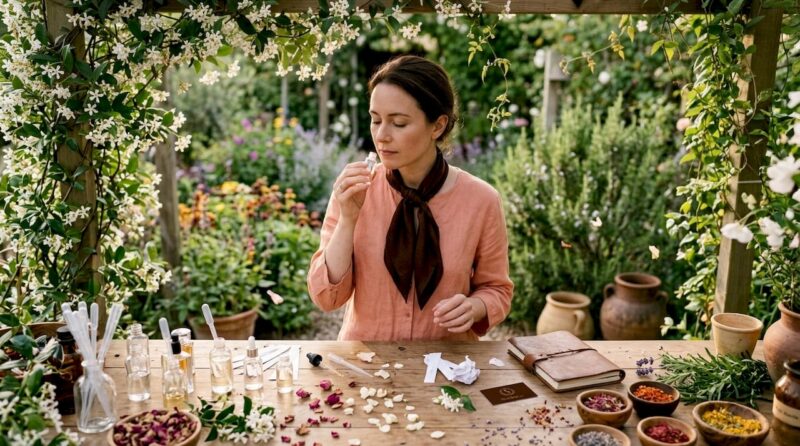
Oud, derived from the resinous heartwood of agarwood trees, has been treasured for centuries across the Arabian Peninsula, South Asia, and East Asia. In the Middle East, burning oud chips (known as bakhoor) before welcoming guests is an act of profound hospitality and honour. Wearing oud-based perfume is not merely aesthetic; it is ceremonial. It communicates respect, status, and cultural pride. This heritage gives oud a depth of meaning that most Western fragrances simply cannot match.
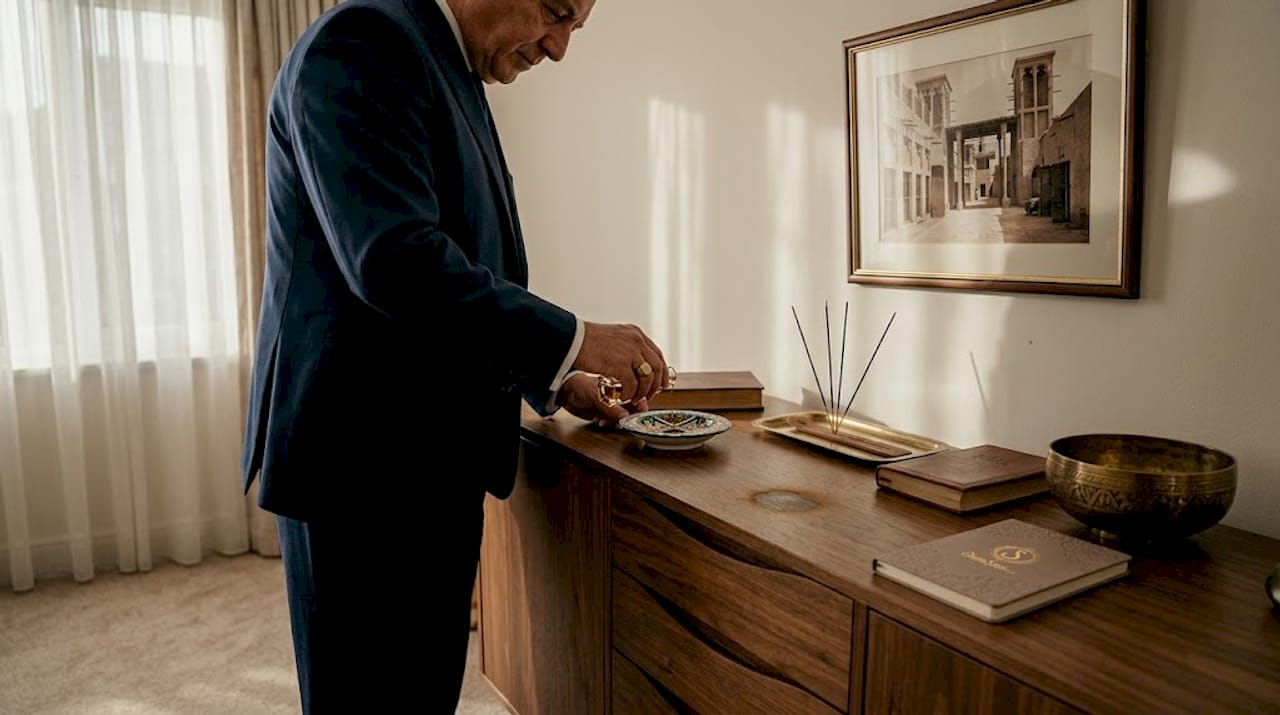
According to Mintel 2026 data, emotional well-being is now the top motivation for fragrance purchase globally, with over 50% of consumers relating their scent choices to mood and memory. This shift is enormously significant. It means that fragrance consumers are no longer buying a smell; they are buying an emotional experience, a cultural connection, a ritual.
Arabian perfumery traditions offer several lessons that the broader fragrance world is only beginning to absorb:
- Layering is art. Traditional Middle Eastern perfumers layer oud, rose, musk, and sandalwood intentionally, understanding that the interaction of notes over hours of wear creates a narrative on the skin.
- Concentration matters. Extrait de Parfum and concentrated attars (pure perfume oils) are the norm in Arabian perfumery, not the exception. This produces extraordinary longevity and sillage.
- Scent is communal. Sharing fragrance, passing a bottle between guests, or applying the same oud to everyone in a gathering is a gesture of unity and affection.
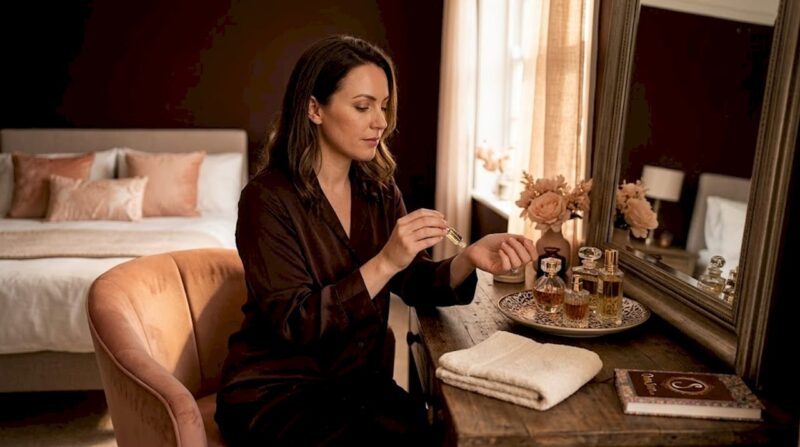
- Ritual amplifies impact. The deliberate act of choosing and applying perfume as part of a daily or ceremonial routine deepens the emotional response.
“Oud is not simply a note in a perfume. It is liquid gold, a bridge between the ancient and the contemporary, between the personal and the sacred.”
In the UK, demand for creamy, versatile oud fragrances has grown substantially, reflecting both the influence of diaspora communities and a broader cultural appetite for depth and authenticity. Explore the oud trends shaping 2026 and discover how the luxury oud landscape is becoming more accessible to British fragrance lovers than ever before.
Practical applications: Enhancing well-being and daily ritual with scent
Equipped with both the science and the cultural context, let us turn to practical guidance you can apply every day.
The evidence for scent’s mood-altering properties is robust. Pleasant scents measurably slow heart rate and shift the nervous system toward a calmer, more positive state. Orange fragrance, specifically, has been shown via EEG to shift emotional valence from 2.61 to 3.68, a statistically significant improvement in perceived positivity, alongside measurable changes in temporal dilation. These are not anecdotal benefits. They are the kind of data that should inspire you to treat your fragrance choices with the same intentionality you bring to nutrition or exercise.
Here is a practical framework for integrating scent into your daily well-being ritual:
- Morning activation. Choose a bright, energising fragrance with citrus, peppermint, or green top notes. These scents increase beta brainwave activity, sharpening focus and alertness for the day ahead.
- Midday grounding. If the afternoon brings pressure or fatigue, apply a grounding woody or oud-forward fragrance to your wrists. The warmth of agarwood base notes signals safety and stability to the nervous system.
- Evening transition. Lavender, rose, or soft musk encourages the shift from active mode to rest. Research shows lavender alters brain connectivity for up to two hours post-exposure, making it ideal for unwinding.
- Ritual moments. Reserve your most precious, complex fragrance (your true signature scent) for occasions that deserve intention: important meetings, social gatherings, meaningful dates.
- Consistent application. Apply to pulse points at the same time each day to build Pavlovian associations between the scent and a desired emotional state.
Pro Tip: Layering two complementary fragrances, such as a musk base with an oud or rose mid-layer, creates a bespoke aroma that is uniquely yours and dramatically improves longevity. Visit our layering oud scents guide for specific combinations, and review our application tips for maximising every drop.
Additional daily practices worth incorporating include:
- Store fragrances away from heat and light to preserve molecular integrity and ensure consistent mood effects.
- Rotate between two or three complementary scents seasonally to keep your olfactory response fresh and prevent adaptation (the phenomenon where you stop noticing a familiar scent).
- Consider travel-size versions of your key fragrances so that your mood-enhancement toolkit travels with you.
The uncomfortable truth about scent: Why we underestimate its power
Here is what most fragrance articles will not tell you. Western culture has spent decades treating scent as a finishing touch, a pleasant accessory applied after the important decisions have been made. This is a profound mistake, and the science makes it indefensible.
The reality is that olfaction directly accesses the limbic system for emotional and memory processing, with no rational filter between stimulus and response. Meanwhile, unpleasant odours have been shown to worsen self-perception via measurable ERP changes in the brain. In practical terms, this means the fragrance environment around you is shaping your emotional experience and self-image continuously, whether you are paying attention or not.
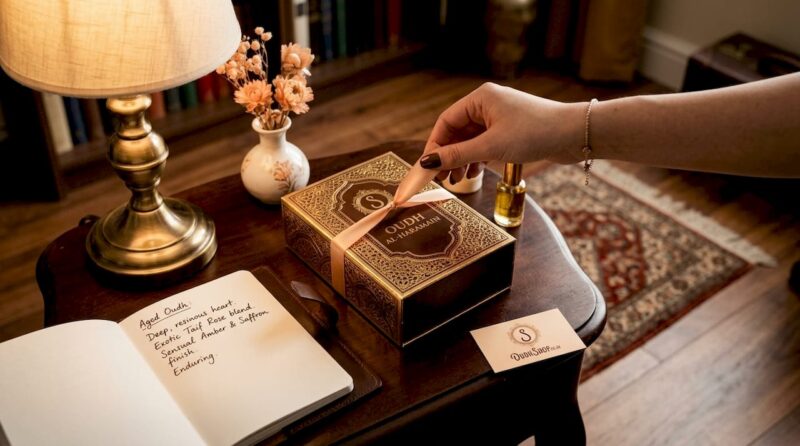
Arabian and oud perfume traditions understood this intuitively for centuries. They built entire rituals, social customs, and artistic traditions around it. The West, for all its scientific sophistication, is only beginning to catch up. We believe the most transformative shift a fragrance enthusiast can make is to stop thinking of perfume as cosmetic and start treating it as a practice, as intentional and meaningful as any other self-care ritual. The meaning behind perfume as a gift reflects this perfectly: giving someone a beautiful scent is giving them an emotional tool, not just a luxury object.
Pro Tip: Challenge the assumption that fragrance is superficial. Approach your next scent selection with genuine intention, asking yourself what emotional state you want to support, what cultural resonance you wish to carry, and what identity you want to reinforce.
Explore oud and Arabian perfume essentials: Find your scent
If this exploration of scent’s power has sparked curiosity, there is no better moment to act on it than now.
At Oudh Shop, we have curated a collection of genuine oud perfumes, luxurious musk blends, and exquisite Arabian fragrances designed to support exactly the kind of intentional, identity-driven fragrance practice we have described here. Whether you want to experiment before committing to a full bottle, our range of travel-size oud perfumes makes it effortless to integrate different scents into your daily mood rituals. Not sure where to start? Our perfume finder guides you through the rich landscape of oud, amber, and musk to match your personality with your perfect signature scent.
Frequently asked questions
How does scent influence mood and memory?
Scents connect directly to the limbic system, the brain’s emotional and memory centre, bypassing the rational thalamus and producing immediate emotional and physiological responses before conscious thought occurs.
Which fragrances have proven benefits for well-being?
Lavender and peppermint are scientifically recognised for measurably altering brainwave activity and mood, while orange fragrance improves emotional valence significantly via EEG, with peppermint boosting arousal and alertness via beta wave increases.
How do signature scents like oud affect confidence?
Signature scents build positive neural associations over time, with over half of fragrance users linking their chosen scent directly to mood and self-image, reinforcing confidence through repeated olfactory and emotional feedback.
Are cultural traditions important when choosing a fragrance?
Absolutely. The rich ceremonial and social heritage behind scents like oud means they carry layers of cultural meaning that deepen your personal connection to a fragrance far beyond its individual notes.
Can scent really enhance daily well-being?
Yes, consistently. Pleasant scents slow heart rate and shift the nervous system toward calm, meaning that an intentional daily fragrance practice delivers genuine, measurable improvements to emotional outlook and overall well-being.